


The story of the Transatlantic Slave Trade is the foundational moral reckoning of the modern West. From the 15th to the 19th centuries, European powers—Portugal, Spain, Britain, France, and the Netherlands—forcibly transported an estimated 12.5 million Africans across the Atlantic. Roughly 10.7 million survived the Middle Passage, and they were sold into chattel slavery, a system of hereditary, race-based bondage that built the economies of the Americas. The consensus holds that this was a crime of unique scale and depravity, rooted in racial ideology and capitalist greed. It is taught in schools, memorialized in museums, and debated in public life as the defining sin of Western civilization.
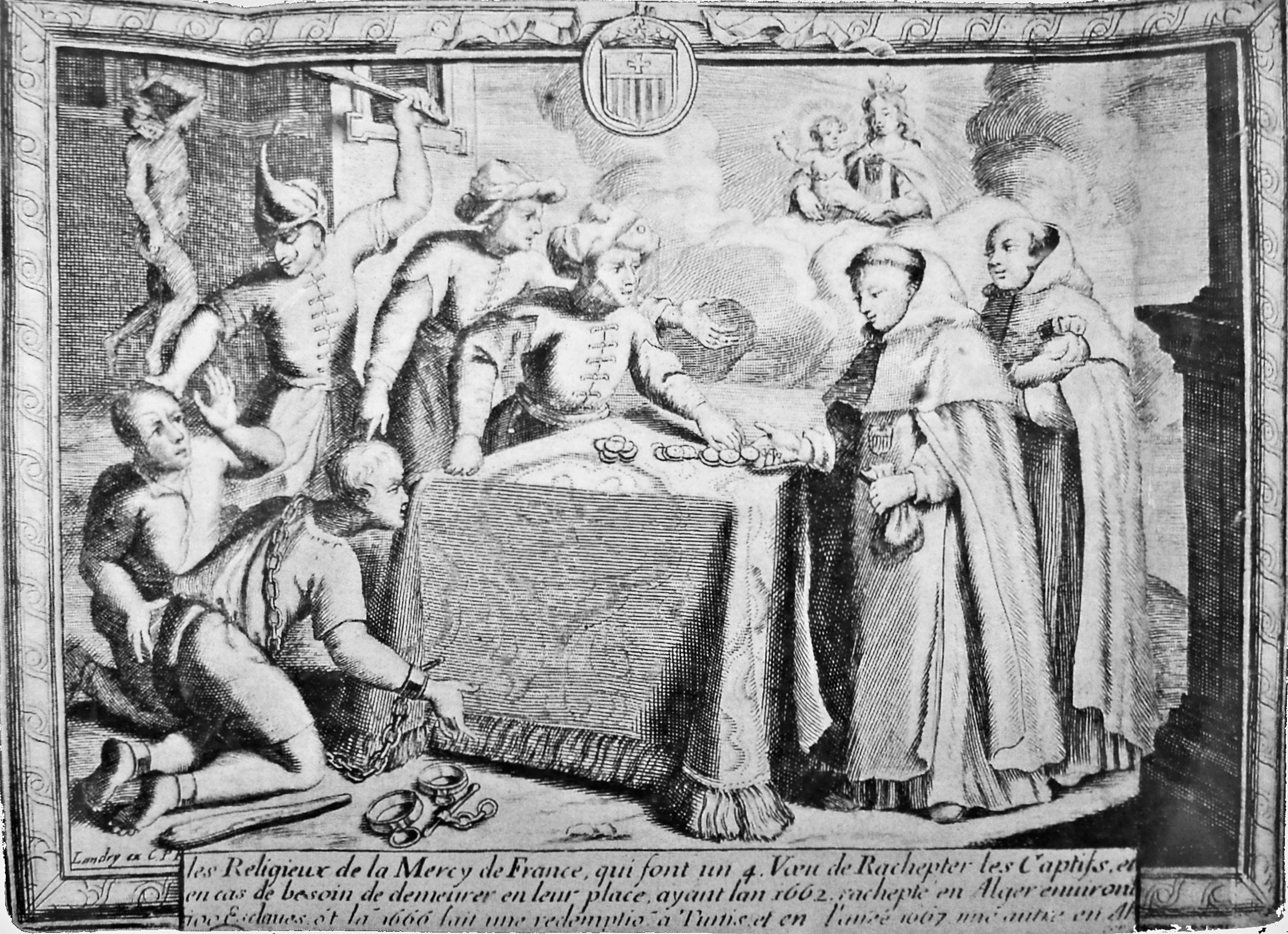
This narrative is true. It is also incomplete. The consensus rarely acknowledges that, during the same centuries, another slave trade was thriving on the opposite side of the Atlantic—one in which the victims were white Christians and the captors were Muslim pirates operating from the Barbary Coast of North Africa. From the 16th to the early 19th centuries, Barbary corsairs raided the coasts of Europe and the Mediterranean, capturing an estimated 1 to 1.5 million Europeans and selling them into slavery in Algiers, Tunis, Tripoli, and Morocco. The scale was not equal to the Transatlantic trade, but it was not trivial. And yet, this history is largely absent from the standard curriculum. Why?
The Question
The consensus narrative of slavery focuses on race and power. But it quietly avoids a question that challenges its neat moral geography: why did the West—so eager to condemn the enslavement of Africans—virtually ignore the enslavement of its own people by non-European powers?
The question is uncomfortable because it demands we confront a double standard. If slavery is an absolute evil, then all slavery should be equally condemned. But the Barbary slave trade was not forgotten because it was small—it was forgotten because it did not fit the story the West wanted to tell about itself. The Transatlantic trade became a symbol of European guilt and African victimhood. The Barbary trade, by contrast, was a story of European victimhood and Muslim aggression, and it complicated the narrative of a purely white, Christian oppressor. So it was quietly dropped from the collective memory. The question is not whether the Barbary trade was as large or as brutal—it was not—but whether our selective memory reveals something about how we construct moral history.
The Evidence
The evidence for the Barbary slave trade is extensive, though it has been marginalized in academic history. The Barbary corsairs were state-sponsored pirates operating from the ports of Algiers, Tunis, Tripoli, and Salé. They raided the coasts of Italy, Spain, France, England, Ireland, and as far north as Iceland. In 1627, a Barbary fleet captured over 200 people from the Icelandic village of Grindavík. In 1631, they sacked Baltimore, Ireland, carrying off over 100 villagers. By the 17th century, Algiers alone held an estimated 25,000 to 40,000 Christian slaves at any given time.
The captives were not simply held for ransom—they were worked to death in quarries, chained to oars in galleys, and sold in markets. The accounts of survivors, known as “captivity narratives,” are harrowing. One of the most famous is that of Thomas Phelps, an English sailor captured in 1684, who described being “stripped naked, examined like a horse, and sold for sixty dollars.” Another is that of Joseph Pitts, an Englishman who was captured in 1678, converted to Islam under duress, and eventually escaped. His narrative, published in 1704, details the brutal conditions: “They are fed with bread and water, and are forced to work from morning till night, and are frequently beaten with a cudgel.”
The scale of the trade was significant. Historian Robert C. Davis estimates that between 1530 and 1780, Barbary corsairs captured between 1 million and 1.25 million Europeans. Other scholars, like Daniel J. Vitkus, argue for a lower figure of 500,000 to 800,000, but even the conservative estimates dwarf the number of Africans taken to the Americas in the same period? No. But they are not negligible. The Barbary trade was the largest enslavement of white Europeans since the fall of the Roman Empire.
Why did the West not respond with the same moral outrage? The answer is partly geopolitical. The Barbary states were nominally part of the Ottoman Empire, and European powers—especially Britain and France—often paid tribute to the corsairs rather than confront them militarily. It was cheaper to buy protection than to wage war. The United States, after independence, fought two Barbary Wars (1801–1805 and 1815) to end tribute payments, but these were limited conflicts. The trade finally ended in the 1830s, when France conquered Algiers.
But the deeper reason for the silence is cultural. The Barbary slave trade was not a racial crime—it was a religious one. Christians enslaved Muslims, and Muslims enslaved Christians. This did not fit the emerging narrative of race-based slavery that justified the Atlantic trade. By the 19th century, the West had constructed a moral hierarchy in which African slavery was the ultimate evil, while the enslavement of white Christians by Muslims was a footnote. The captivity narratives that had once been bestsellers—like A True and Faithful Relation of What Passed for Many Years Between Dr. John Dee and Some Spirits—were forgotten, replaced by abolitionist literature focused on Africa.
The Discomfort
Sitting honestly in this evidence requires resisting the temptation to overclaim. The Barbary slave trade was not equivalent to the Transatlantic trade in scale, duration, or economic impact. The Atlantic trade involved 12.5 million people, lasted over 400 years, and was central to the rise of capitalism. The Barbary trade involved perhaps 1.25 million people, lasted about 300 years, and was a regional phenomenon. To equate them would be a false moral equivalence.
But the discomfort is real. It lies in the realization that the West’s selective memory serves a purpose. By forgetting the Barbary trade, we preserve a clean story of oppressor and oppressed, of white guilt and black victimhood. The Barbary trade complicates that story because it shows that white Europeans were also victims of mass enslavement, and that Muslims were also slaveholders. This does not excuse the Atlantic trade, but it does challenge the idea that slavery was a uniquely European, racial crime.
The deeper implication is that our moral history is not written by the victims—it is written by the victors, and by those who control the narrative. The Barbary trade was forgotten because it did not serve the interests of 19th-century abolitionists, 20th-century civil rights activists, or 21st-century social justice movements. It was a historical inconvenience. And so it was buried.
This does not mean we should resurrect it as a “whataboutism” argument to deflect from the Atlantic trade. That would be a misuse of the evidence. But it does mean we should ask why we remember certain atrocities and forget others. The answer is not always about scale or brutality—it is about narrative.

The Open Floor
I have argued that the West’s silence on the Barbary slave trade is not an accident of history but a choice—a choice to remember one atrocity and forget another, based on what serves the dominant moral narrative. But I do not claim to have the final word. Here are the questions I want to leave with you:
Is it possible to acknowledge the Barbary slave trade without using it to diminish the Transatlantic trade? Or does any mention of it inevitably become a “whataboutism” that derails the conversation about racial justice?
What does the selective memory of slavery tell us about how we construct moral history? Are we capable of holding multiple, contradictory truths about the past, or do we need a single narrative to guide our present?
If the Barbary trade had been larger—say, 10 million Europeans enslaved—would it be taught in schools today? Or would it still be forgotten, because it does not fit the story of Western guilt?
I invite you to disagree. The comments are open. Tell me where I am wrong, where I have overreached, or where I have missed the mark. The goal is not to win an argument—it is to think more clearly about the past, and about ourselves.