


The visual evidence presented here captures a violent collision between two distinct epochs of authority. We observe the Royal Ontario Museum, where the ‘Crystal’—a jagged, deconstructivist intervention—slices into the historic masonry of the original 1914 structure. While architectural critics discuss this in terms of aesthetics, the sociopolitical lens reveals a manifestation of the pseudo-conservative paradox identified by the Frankfurt School. The original stone facade represents the ‘Rigid Traditionalism’ Adorno described: a yearning for a mythical, orderly past, solid and impermeable. However, the parasitic glass structure does not liberate; it imposes a new, sharper form of dominance.

The ‘conventionalism’ Adorno warned of has not disappeared; it has merely changed its skin. Note the lack of human scale in this interaction. The image highlights a towering, aggressive geometry that dwarfs the individual, reinforcing the authoritarian trait of ‘Power and Toughness.’ The structure demands submission to its form. The seamless glass reflects the sky but reveals nothing of the interior, a perfect architectural metaphor for the ‘anti-intraception’ trait on the F-Scale—the refusal to look inward, replaced by a polished, impenetrable surface. This is not a dialogue between eras; it is a hostile takeover, where the aesthetic of the ‘new’ functions with the same exclusionary rigidity as the ‘old’ it claims to disrupt. We are looking at the institutionalization of aggression disguised as cultural progress.
II. The Cartography of Domination: Diagnosing the Geopolitical Psyche
To understand the persistence of the authoritarian impulse, one must look beyond the individual psyche to the maps that dictate global hierarchy. This document—the Orchard Lisle ‘Map of Near and Middle East Oil’—serves as the macro-scale equivalent of the F-Scale diagnostic tool. Just as the personality test measures the individual’s submission to power, this cartography measures the submission of geography to capital. The map does not show culture, language, or humanity; it visualizes the world solely as a resource to be extracted and controlled.
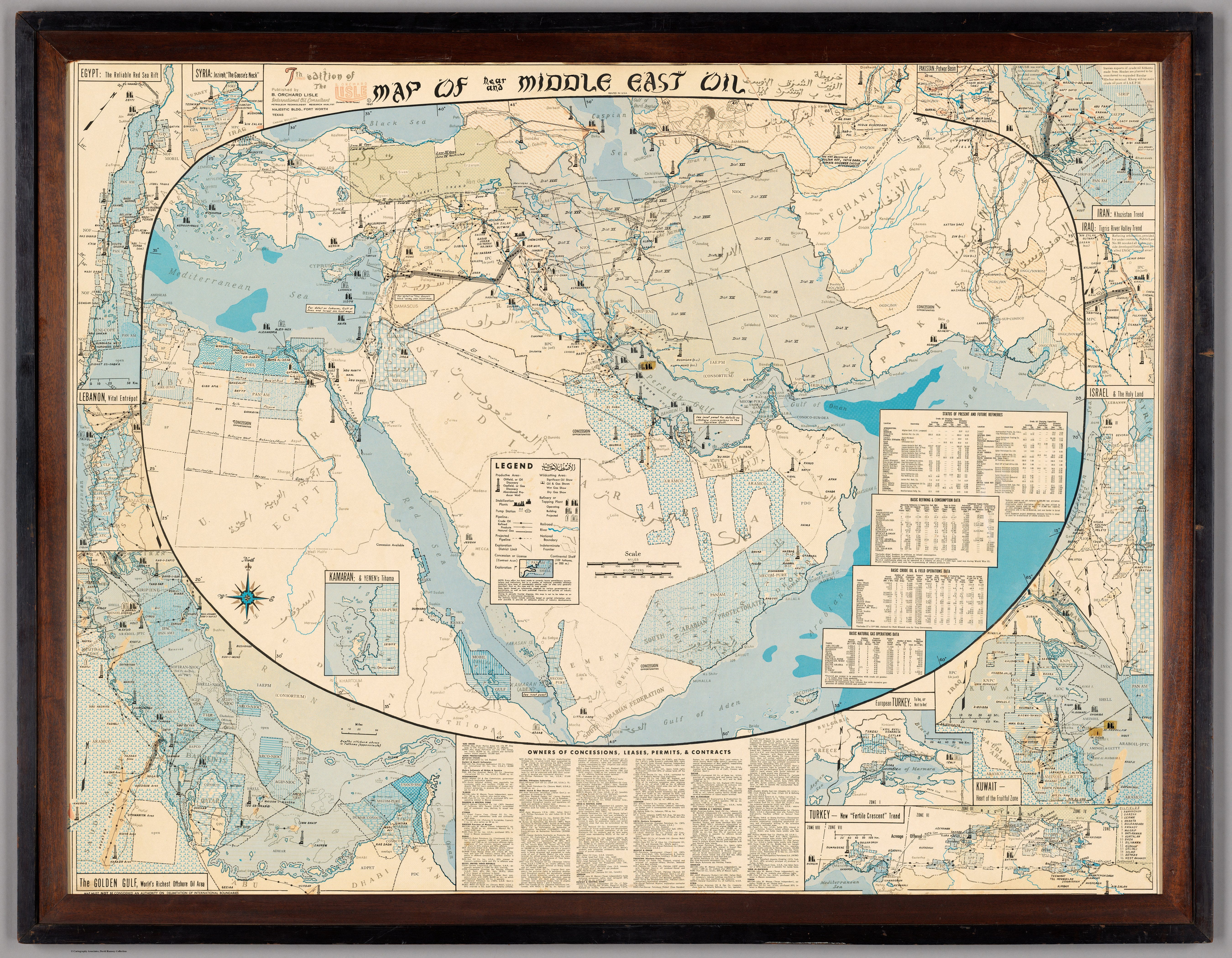
The lines drawn here are not borders; they are scars of possession. The visual density of the map—cluttered with pipelines, concessions, and shipping routes—illustrates the authoritarian obsession with ‘Projectivity’: the belief that the world is a dangerous, wild place that must be cataloged, bound, and exploited to be safe. Notice the complete abstraction of the populations living within these zones. They are rendered invisible beneath the overlay of corporate logos and concession boundaries. This is the ultimate expression of the ‘Authoritarian Aggression’ trait: the dehumanization of the subject to justify its exploitation. The map serves as a sanitized instrument of control, allowing the distant observer to manipulate the fate of millions without ever encountering their gaze. > THIS IS THE BUREAUCRATIZATION OF BARBARISM: THE REDUCTION OF SOVEREIGN LANDS TO FLUID OUNCES AND BARRELS.
III. The Post-War Diagnosis: The Fragmented Self
The intellectual lineage of this investigation rests on the post-war realization that fascism was not a political accident, but a psychological predisposition. This illustration captures the disoriented, inverted nature of the ‘Authoritarian Personality’—a mind turned upside down, speaking into a void. Adorno’s research suggested that the fascist individual is characterized by a weak ego that compensates through identification with power figures and rigid in-group/out-group thinking.

The subject is blind to their own inversion. The glasses, a symbol of intellectual perception, are rendered useless by the orientation of the head. This visualizes the ‘Stereotypy’ trait: the inability to think outside of rigid categories, leading to a distorted view of reality. The figure speaks, but the speech bubble is blank—a vacuum of original thought, filled only by the slogans and dictates of the collective authority. This is the portrait of the ‘cyclist personality’ described by Adorno: one who bows to those above and kicks those below. The clean lines and sterile composition of the image betray the messiness of the human condition, reflecting the authoritarian’s desperate need for cleanliness and order in a world they perceive as chaotic. It is a diagnosis of a mind that has surrendered its autonomy for the comfort of obedience.
IV. The Out-Group and the Apparatus of Expulsion
The theoretical framework of the F-Scale finds its most harrowing physical proof in the treatment of the ‘Out-Group.’ This photograph, likely capturing the displacement of Palestinian refugees during the Nakba (1948), documents the inevitable endpoint of authoritarian aggression. When a society defines itself through rigid exclusion, the ‘other’ must be physically removed to maintain the fantasy of purity. The landscape here is stark, the movement forced. There is no ‘security apparatus’ visible in the form of fences or cameras in this specific frame, but the *effect* of that apparatus is total.
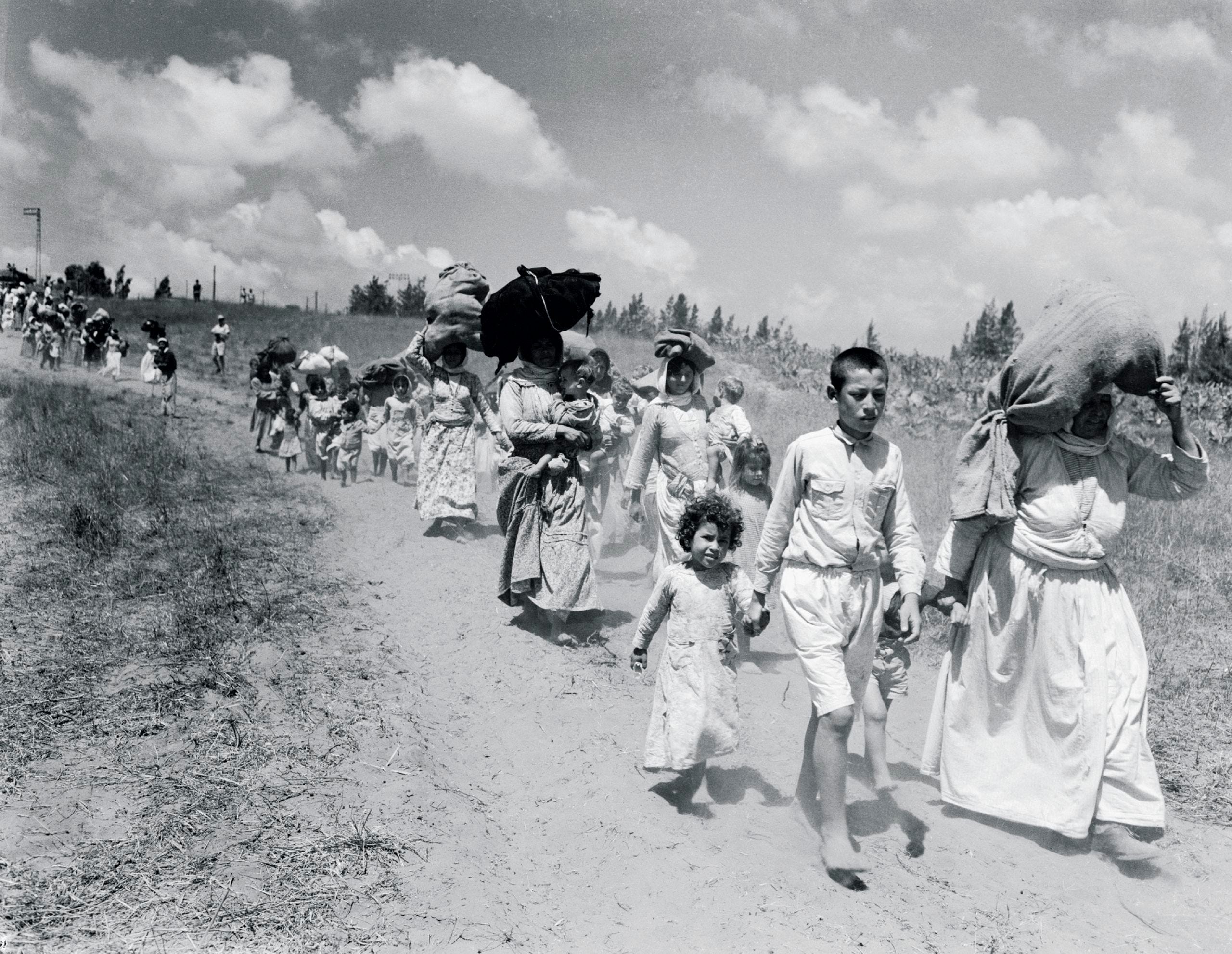
Displacement is the highest form of surveillance: it is the decision that you do not belong anywhere. The subjects carry their entire lives in bundles, reduced to a state of bare life. This image illustrates the consequence of ‘Projectivity’—the projection of the in-group’s fears onto a scapegoated population. The fear of the ‘intruder’ justifies their expulsion. Note the contrast between this chaotic, dusty reality and the rigid, clean lines of the Oil Map and the Museum Crystal. The ‘order’ of the authoritarian enclave is purchased at the price of this chaos. The women and children walking the dirt path are the collateral damage of a world view that demands absolute homogeneity. > THEY ARE WALKING AWAY FROM THE MAP, OFF THE GRID OF ‘CIVILIZATION’ THAT HAS NO PLACE FOR THEM. They are the visible proof of who is NOT allowed to exist within the rigid aesthetics of the new order.