


You sit on it every day. You press the lever, hear the cascade, and watch the water swirl. You never think about what it’s really doing—not just to your waste, but to your sense of self, your place in the world, and the invisible walls it built between you and everyone else.
The Mechanism
The flush toilet is not a simple machine. It is a sealed, water-based system that removes your biological reality from your sensory experience. You produce something messy, smelly, and universal, and within seconds, it is gone. You never see it, touch it, or smell it again. This is the genius of the modern flush toilet: it makes you forget you are an animal.
But this was not always the case. For most of human history, waste was a public matter. Chamber pots were emptied into streets, cesspits overflowed, and rivers ran with sewage. Disease was a constant neighbor. The smell was everywhere. You could not hide from what your body produced, because it was never truly hidden.
The Victorian Lie
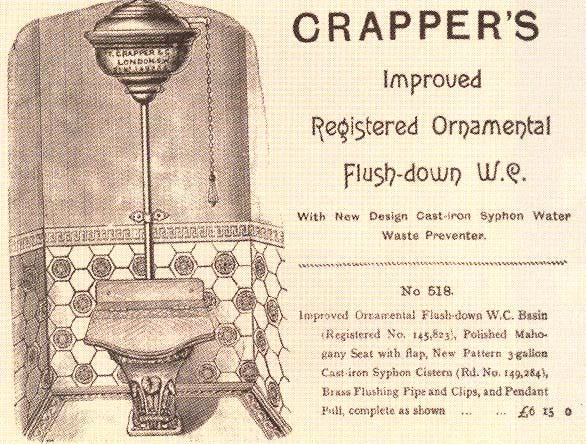
Enter Thomas Crapper and the Victorian sanitation movement. The story you know is one of progress: a heroic inventor, a cholera epidemic, a clean city. But the real history is darker, more calculating. The flush toilet was not invented to save lives. It was invented to save property values.
In the 1840s and 1850s, London was drowning in its own filth. The Great Stink of 1858 forced Parliament to act—not because people were dying, but because the smell was offensive to the wealthy. The solution was not to clean the streets for the poor. It was to build a sewer system that would flush the waste away from the rich neighborhoods and dump it downstream.
The flush toilet was the perfect tool for this agenda. It allowed the upper classes to pretend their waste did not exist. It sealed the problem in porcelain and water, then sent it to a place they would never see. The poor, of course, were left with the overflow.

The System It Came From
You call it sanitation. Historians call it the great evacuation. But the system is not about hygiene. It is about displacement.
The flush toilet is the physical embodiment of a Victorian class system that believed the poor were dirty, the rich were clean, and the two should never mix. The sewer system was designed to carry waste out of sight, but also to carry the poor out of mind. If you could not see their filth, you could not see their suffering.
This system did not end in the 19th century. It is still running. Every time you flush, you are participating in a ritual of separation. You are saying: this is not mine anymore. It belongs to someone else, somewhere else, where I do not have to think about it.
What It Quietly Costs You
You think the flush toilet saves you from disease. It does, in a narrow sense. But it also costs you something you never notice: your connection to the cycle of life.
Before the flush toilet, waste was returned to the soil. It fertilized crops, fed plants, completed a loop that had sustained human civilization for millennia. The flush toilet broke that loop. It turned waste into a problem to be managed, not a resource to be valued. It made you a consumer, not a participant.
And it costs you money. Every flush uses 1.6 to 7 gallons of clean drinking water. You are literally flushing your resources away. But you do not notice, because the mechanism is designed to make you forget.
One Concrete Thing to Notice in the Next 24 Hours
The next time you flush, do not look away. Watch the water. Notice how fast it disappears. Notice how silent the process is. Notice that you do not see where it goes. Then ask yourself: who cleans this up? Who lives downstream?
A Sharp Closing Question
You have been told the flush toilet is a triumph of modern sanitation. But what if it is actually a triumph of denial? What if the real invention is not the toilet, but the ability to hide your own waste from yourself—and from everyone else?