


A forensic reconstruction of Václav Havel’s ‘The Power of the Powerless’ applied to the modern climate crisis. By analyzing five distinct artifacts—from ritualized diplomacy to the algorithms of denial—we expose the ‘post-totalitarian’ nature of the carbon economy. The investigation reveals that our paralysis is not a failure of technology, but a success of systemic automatism, where ‘greenwashing’ and bureaucratic theater function exactly like the ideological slogans of the Eastern Bloc: not to communicate truth, but to signal obedience to a dying machine.
We begin not with the dictators, but with the architecture of compliance. Václav Havel’s seminal 1978 critique identified a system that maintained power not through direct terror, but through a ‘pan-interpretative’ web of lies that everyone was compelled to uphold. The primary mechanism of this control was not the gun, but the mundane requirement to signal allegiance to the status quo.
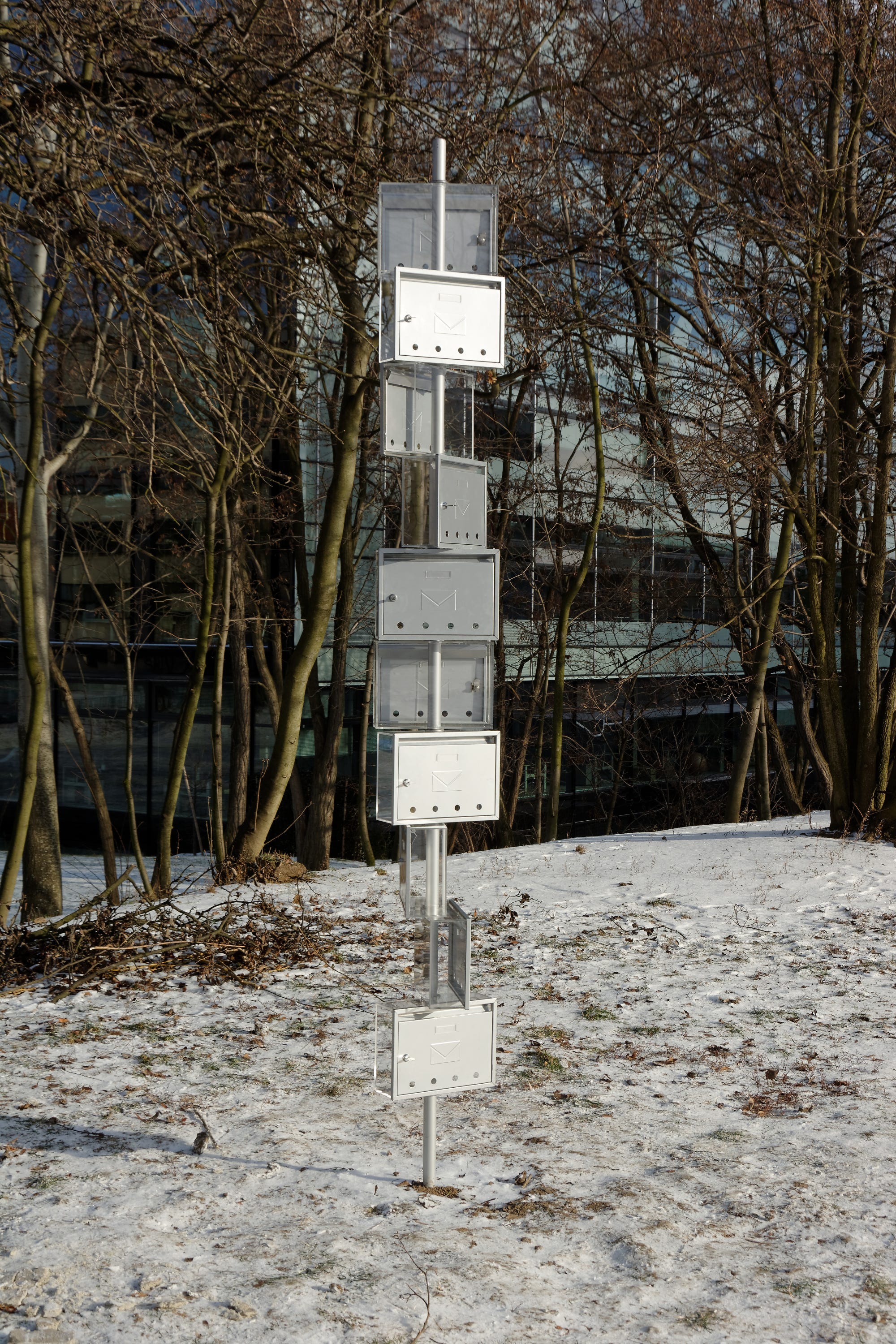
In this stark, vertical assembly of receptacles—cold, uniform, and set against a backdrop of dormant nature—we see the physical manifestation of the ‘social auto-totality.’ These are not merely boxes; they are the standardized inputs for a society that demands participation in the lie. Havel described a system where individuals are pressured to ‘live within a lie’ to preserve their material comfort. These white, sterilized containers represent the hollow social contract of the carbon age: we deposit our silence, and in exchange, the system grants us the stability of the grid. The structure is rigid, transparent yet empty, standing as a sentinel in the natural world it ignores. It illustrates the ‘automatism’ of a system that has become detached from human purpose, existing solely to replicate its own geometry. Who is missing here? The chaotic, organic life that these boxes ostensibly serve. Instead, we see only the infrastructure of administration, waiting to process the next round of bureaucratic assent.
II. Ritualized Diplomacy and the Bureaucracy of Inaction
If the previous artifact demonstrated the infrastructure of individual compliance, this tableau reveals the high theatre of the ruling ideology. Havel argued that the post-totalitarian system relies on ‘rituals’ to bridge the gap between the reality of failure and the illusion of progress. The applause captured here is not a reaction to achievement; it is the achievement itself.
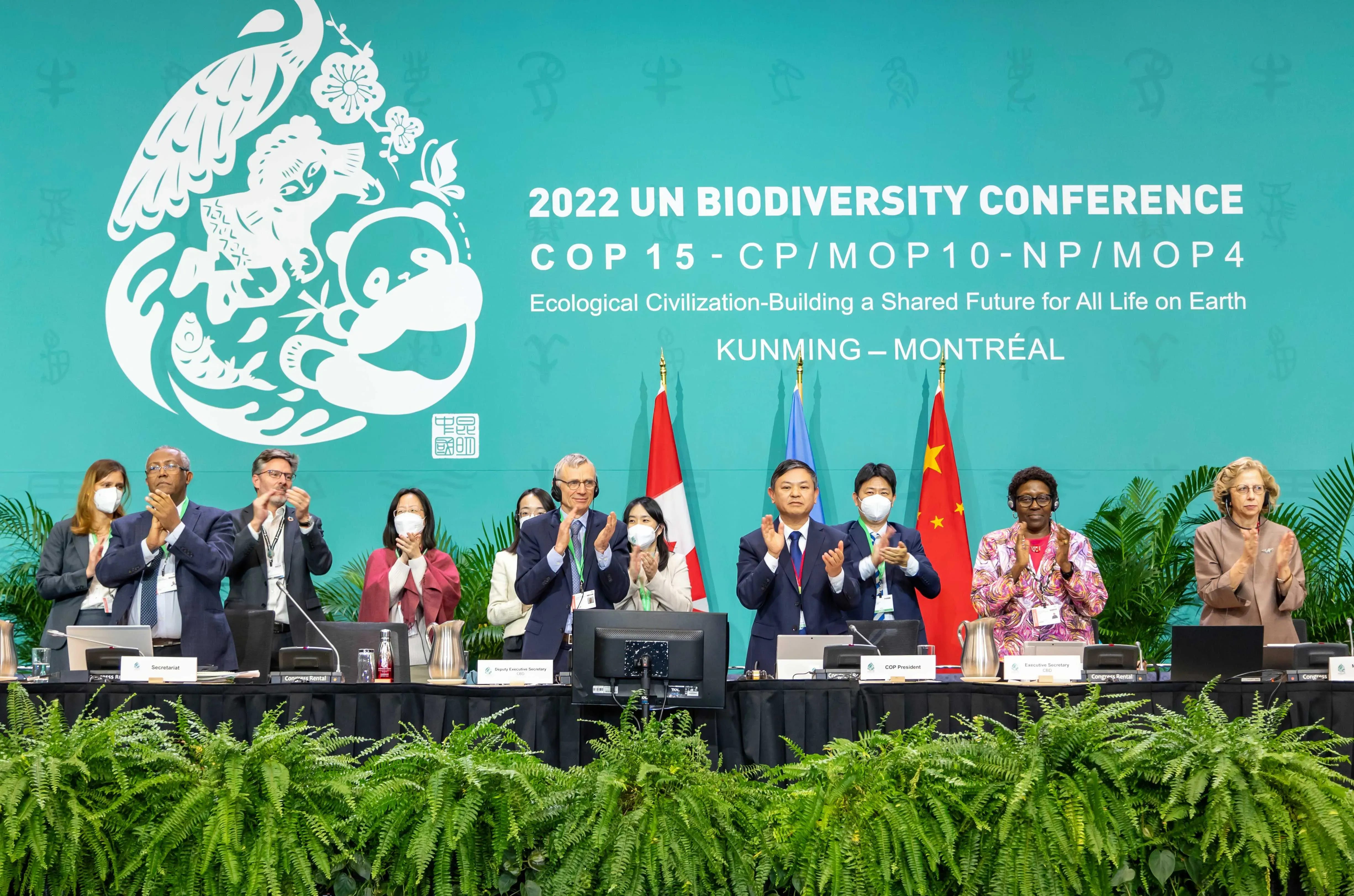
Observe the symmetry, the flags, the synchronized clapping of the COP 15 delegates. This is the ‘panorama’ Havel warned of—a visual performance designed to convince the spectators that the machinery of governance is functioning. > “THE SYSTEM SERVES ITS OWN EXPANSION RATHER THAN HUMAN NEEDS.”
The individuals on this stage are not acting as free agents but as functionaries of the ‘global automat.’ Their applause masks the terrifying silence of the data: rising temperatures, collapsing biomes, and the acceleration of the very crisis they are convened to halt. The ritual serves a singular strategic purpose: to neutralize the existential threat by wrapping it in the comforting aesthetics of procedure. By celebrating the *process* of negotiation, the system successfully defers the *substance* of action. The lie is maintained not by suppressing the truth of climate change, but by absorbing it into the dull, clapping rhythm of the conference hall.
III. The Automatism of the Industrial Machine
Havel wrote of a ‘blind force’—a system that operates on an internal logic independent of human will or morality. In the digital epoch, this force is no longer metaphorical; it is algorithmic. The industrial machine protects itself through layers of automated denial, creating friction that exhausts opposition before it can even enter the room.
This artifact—a digital blockade—is the perfect unintended allegory for the ‘Automatism’ of the modern industrial state. It is the face of a system that does not negotiate, does not reason, and cannot be pleaded with. The ‘verification’ required here is a demand for conformity to a protocol, mirroring the ideological vetting of the Eastern Bloc. Just as the carbon economy places infinite bureaucratic hurdles in front of transition—subsidies for fossils, tariffs on renewables, permitting purgatories—this screen represents the ultimate gatekeeper. It is the banality of evil rendered in HTML. The ‘Ray ID’ is the modern equivalent of the party stamp; without it, you do not exist. The machine prioritizes its own security over the user’s agency, just as the economic system prioritizes infinite growth over planetary survival. We are asked to wait, to verify, to prove we are ‘human,’ all while the automated systems of extraction run without pause.
IV. The Greengrocer’s Modern Signage
The most famous metaphor in Havel’s *The Power of the Powerless* is the greengrocer who places the sign “Workers of the World, Unite!” in his window. He does so not because he believes it, but because it is the prerequisite for a quiet life. It is his signal to the authorities: “I am afraid and therefore unquestioning.”
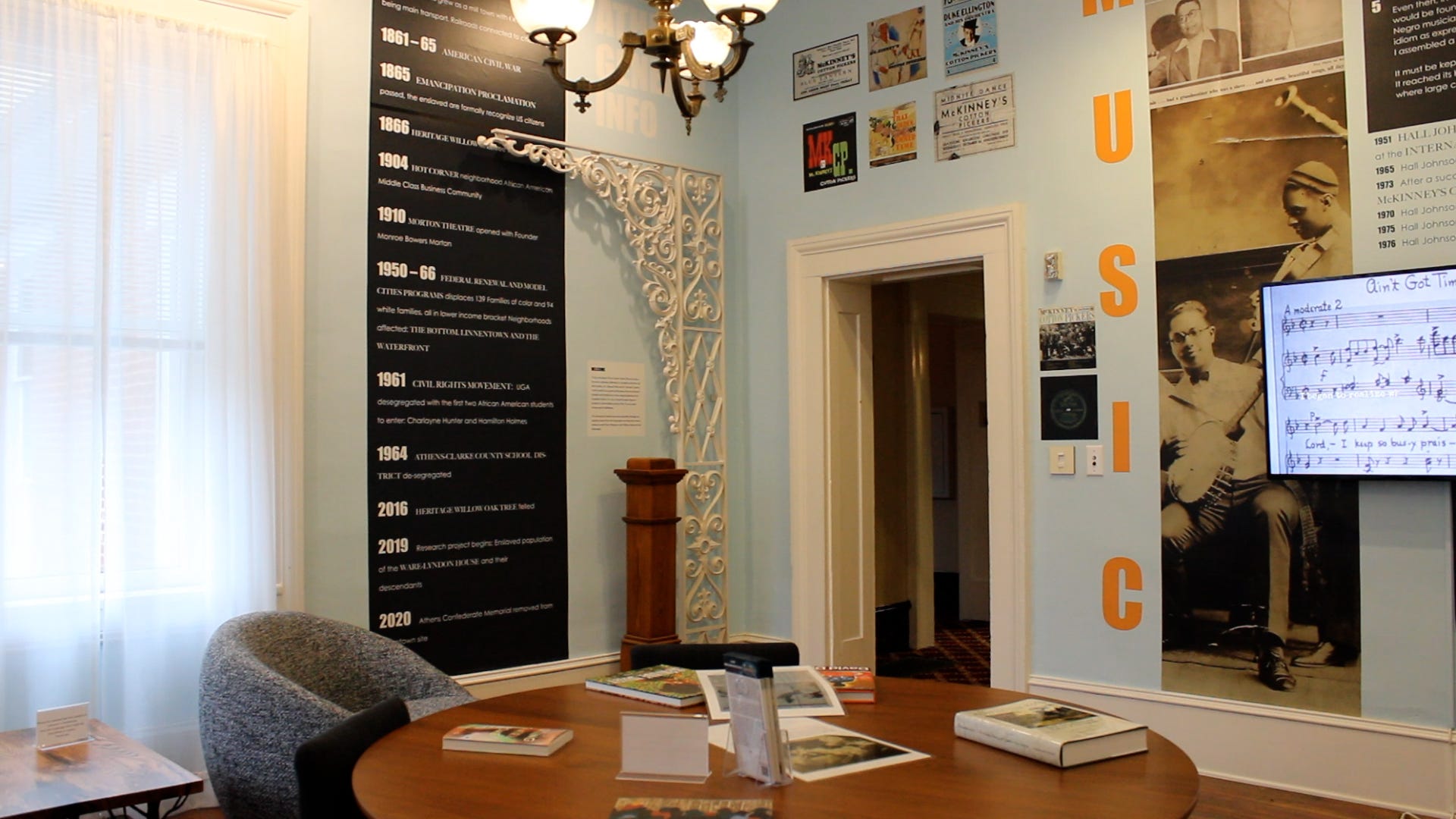
Here, in the curated sanctity of a museum, we find the modern equivalent of the greengrocer’s sign. The timeline of ‘Heritage’ and ‘Civil Rights’ displayed on the wall serves a complex semiotic function. Institutions today display their ‘social awareness’ and ‘sustainability history’ not as a commitment to radical change, but as a shield against it. By narrativizing the struggle—turning the chaotic fight for justice into a neat, Helvetica-formatted timeline—the institution neutralizes the revolutionary potential of the past. It signals virtue to the modern ‘ideological center.’ The juxtaposition of the ‘Heritage Willow’ with the ‘Civil Rights Movement’ suggests a continuity of care that disguises the rupture of the present crisis. This is the aestheticization of struggle. Just as the greengrocer hid behind the slogan, modern corporate and cultural entities hide behind the curated exhibit, using the history of resistance to purchase their present-day legitimacy.
V. The Existential Revolution: Living in Truth
The only power capable of breaking the ‘social auto-totality,’ according to Havel, is the decision to ‘Live in Truth.’ It is the moment the greengrocer takes down the sign. It is the moment the individual steps out of the ritual and screams that the emperor is naked.
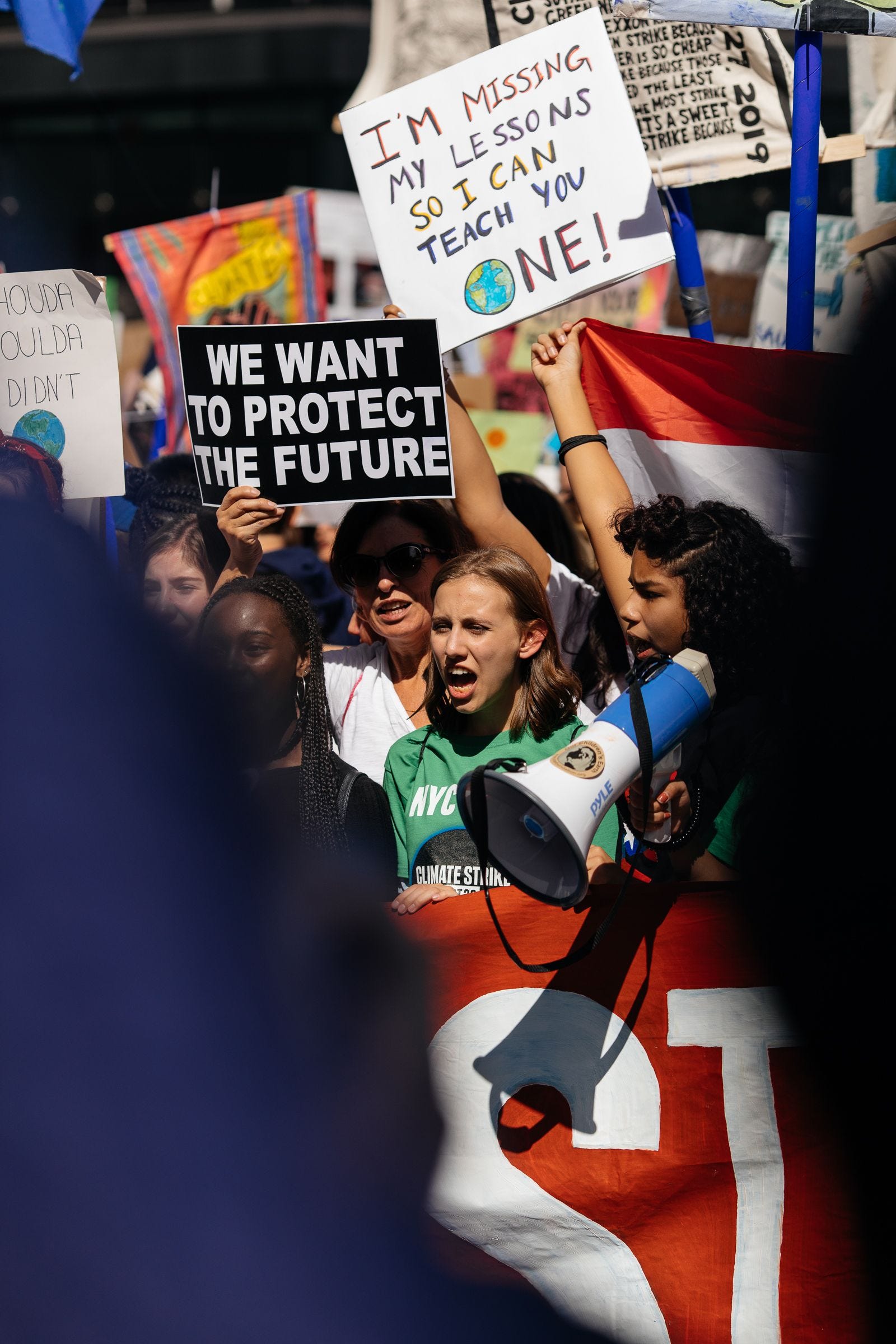
This final image documents the rupture. The chaotic energy, the hand-painted signs, and the raw amplification of the megaphone stand in direct opposition to the sterile boxes, the polite applause, and the curated museum walls of the previous artifacts. This is the ‘parallel polis’ emerging from the shadows. The slogan “WE WANT TO PROTECT THE FUTURE” is not an ideological cliché; it is a primal demand that rejects the complex justifications of the system. Notice who is visible here: the youth, the un-suited, the people who have been excluded from the ‘Just a moment’ verification screens of power. > “THE POWER OF THE POWERLESS RESIDES IN THEIR CAPACITY TO SHATTER THE WORLD OF APPEARANCES.”
When these individuals occupy the street, they do not just protest policy; they expose the fragility of the entire post-totalitarian structure. They force the system to reveal its violent nature, stripping away the veneer of consensus. This is the existential revolution: the refusal to participate in the lie that ‘everything is under control.’