


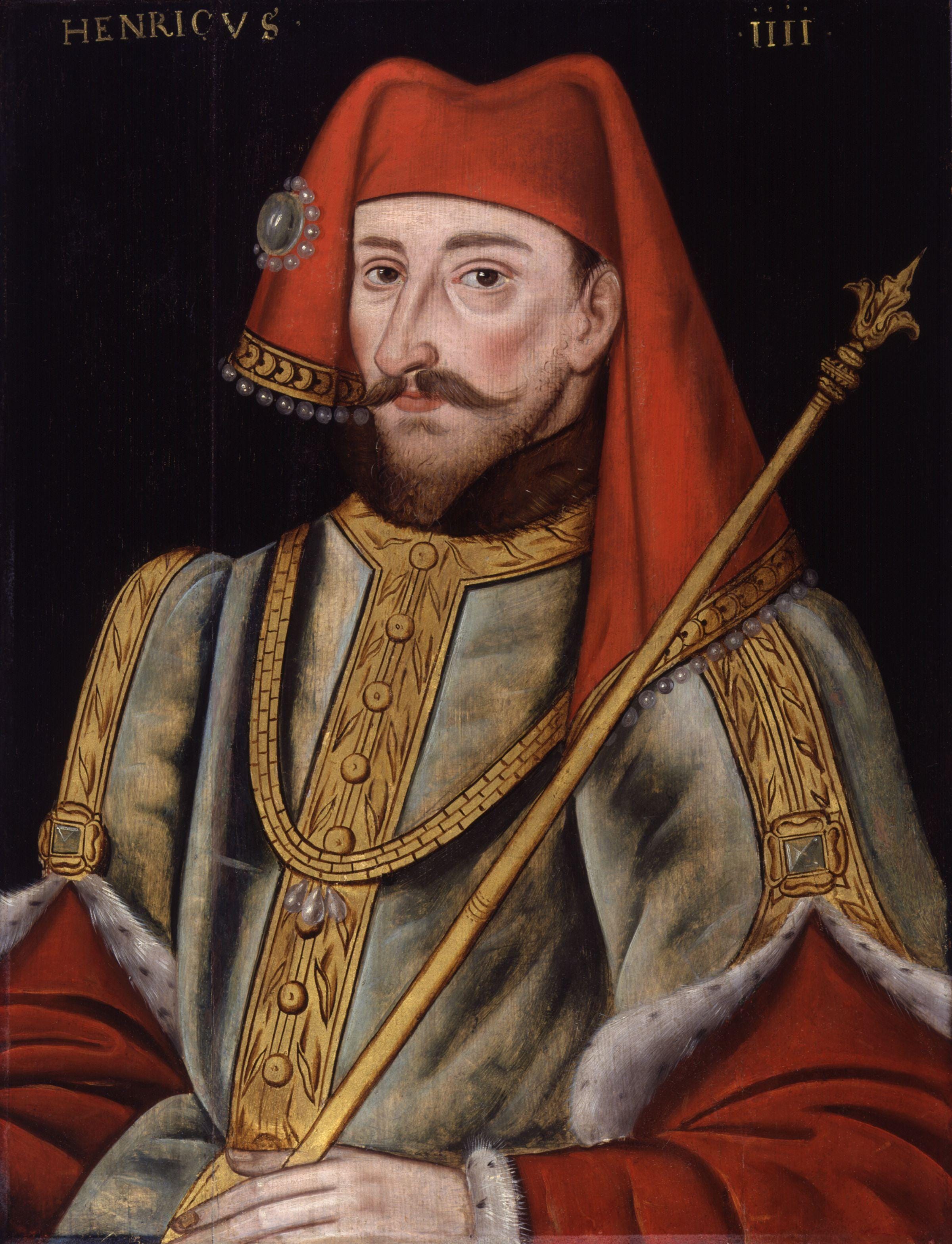
Sovereignty is not defined by who holds the sword, but by who decides when the sword can be drawn. The portrait of Henry IV before us is not merely a depiction of a medieval king; it is a crime scene photograph of political legitimacy under siege. Look at the eyes—wary, sideways-glancing, paranoid. These are the eyes of a man who knows that his crown, represented by the heavy gold and the scepter, is contingent upon a power he cannot fully control. In 1076, the Holy Roman Emperor Henry IV found himself in a war not for territory, but for the right to appoint his own managers—the bishops who administered the empire. Today, the State finds itself in a war for the right to appoint the moderators who administer the public consciousness. The conflict is identical. The Investiture Controversy was never about religion; it was about the administrative stack of society. The Pope claimed the right to install the operating system of the empire; today, the Platform claims the right to install the operating system of reality.
When a Tech CEO bans a sitting President or de-platforms a dissident, they are reenacting the Excommunication of Henry IV. The media frames this as a question of ‘free speech’ or ‘private property,’ but this is a category error. It is a question of Supreme Authority. The ‘Ban’ is the modern Anathema. It does not merely silence; it removes the subject from the communion of the faithful, stripping them of their digital personhood. In the medieval era, an excommunicated king lost the loyalty of his subjects—his oaths were dissolved. In the digital era, a banned politician loses access to the electorate—his reach is dissolved. We are witnessing the re-emergence of the Spiritual Power (the Algorithm) asserting dominance over the Temporal Power (the Law).
VISUAL EVIDENCE: THE USURPER’S GAZE
Examine the specific iconography of the image provided. The figure wears the red *chaperon*, a distinctive headdress of the late medieval period, draped with calculated nonchalance yet adorned with pearls and jewels that scream of manufactured legitimacy. This Henry—Henry IV of England—was a usurper. He seized the throne from Richard II, bypassing the strict laws of succession. He is the perfect avatar for the modern Tech Giant: a power that seized the public square not by divine right, but by force of competence and conquest. The Tech Giants are the Bolingbrokes of our age—usurpers who have wrapped themselves in the royal robes of ‘Community Standards’ to hide the raw exertion of power.
Notice the hand clasping the scepter. It is not a relaxed grip; it is the grip of someone afraid it will be snatched away. The tension in the fingers betrays the insecurity of the Sovereign who knows a higher power exists. For Henry IV of England, that higher power was the lingering doubt of his legitimacy and the judgment of the Church. For the modern State, the higher power is the opaque, proprietary code that determines what citizens see, hear, and believe. The scepter of the State is made of wood and gold; the scepter of the Platform is made of data and attention. The man in the painting knows he can be unmade by a force he cannot command. He is the CEO of the Temporal World, terrifyingly aware that the Spiritual World holds the keys to his survival.
“The sovereign is he who decides on the exception. But today, the algorithm decides on the exception, and the sovereign must submit to the terms of service.”
THE WALK TO CANOSSA
The historical intuition leads us inexorably to the Castle of Canossa in January 1077. Emperor Henry IV, the most powerful man in the secular world, stood barefoot in the snow for three days, begging Pope Gregory VII for forgiveness. Why? Because the Pope had weaponized the spiritual network. By excommunicating Henry, the Pope disconnected him from the feudal server; his vassals no longer had to upload their loyalty. The Emperor had the armies, but the Pope had the API of legitimacy. We have seen this scene replayed in the halls of Congress. When Mark Zuckerberg or the CEOs of the Great Platforms appear before the Senate, the optics suggest the State is in charge—the suits, the gavel, the questions. But this is theater. In reality, it is the Senators who are standing in the snow.
The politician needs the algorithm to win elections. The State needs the cloud to function. The ‘Ban’ is a structural threat that the Temporal Power has no answer for. The State has the monopoly on violence, but the Platform has the monopoly on truth. If the Pope could dissolve the bonds of feudal loyalty with a bull, the Platform can dissolve the bonds of civic reality with a shadowban. The terror in the eyes of the portrait is the realization that the sword is useless against a ghost. You cannot arrest an idea, and you cannot subpoena an algorithm’s intent. The struggle depicted in the Investiture Controversy is the struggle of the hardware (the State) trying to dictate terms to the software (the Church/Tech).
THE COMING CONCORDAT OF WORMS
History does not end in chaos; it ends in a contract. The Investiture Controversy was resolved by the Concordat of Worms in 1122, a treaty that distinguished between the spiritual and temporal authorities. The Emperor kept the scepter (temporal power), but the Church kept the ring and staff (spiritual signs). We are hurtling toward a Digital Concordat. The current state of total war, where Platforms act as supra-state censors and States threaten antitrust annihilation, is unsustainable. A separation of powers is inevitable.
We must expect a settlement where the State retains control over the ‘bodies’ (taxes, prisons, borders) while formally ceding control over the ‘souls’ (content moderation, identity verification, truth) to the technocratic priesthood. The figure in the painting, with his sharp, calculating features, is looking for the deal. He is a pragmatist. He knows he cannot defeat the Priesthood, so he must co-opt it. The future is not a victory of Democracy over Big Tech; it is a merger that creates a new form of Techno-Theocratic Feudalism. The red hood of the King will be stitched together with the server rack of the Engineer. The result will be a Leviathan that Henry IV could only dream of—a sovereign that watches you not just from the throne, but from the screen in your hand.
“We think we are citizens of a Republic. In truth, we are serfs on a digital manor, tilling the data fields for a Lord whose face we are forbidden to see.”