


You did it last year, or maybe you’ll do it again this year. You dragged a dead tree into your living room, wrestled it into a stand, and hung glass balls and lights on its branches. You called it tradition. You called it cozy. You called it Christmas.
But that tree in your corner isn’t just a decoration. It’s a four-hundred-year-old act of defiance, smuggled past censors and kings, planted in the dirt of two separate religious wars. And every time you plug in those fairy lights, you are repeating a gesture that was once illegal, blasphemous, and radical.
Let’s start with the pine needles on your floor.
The Object in Your Hand
You are standing in front of a tree that has been stripped of its roots. It is dying slowly in your home, and you are celebrating that. You water it. You vacuum around it. You take a picture of your children next to it.
Now ask yourself: Why a tree? Why not a stone, a fire, a painted wall? Why this specific, inconvenient, shedding, flammable piece of forest?
The answer is not in a department store catalog. It is in a German forest in the 1500s, where a small group of Christians decided to break the rules.
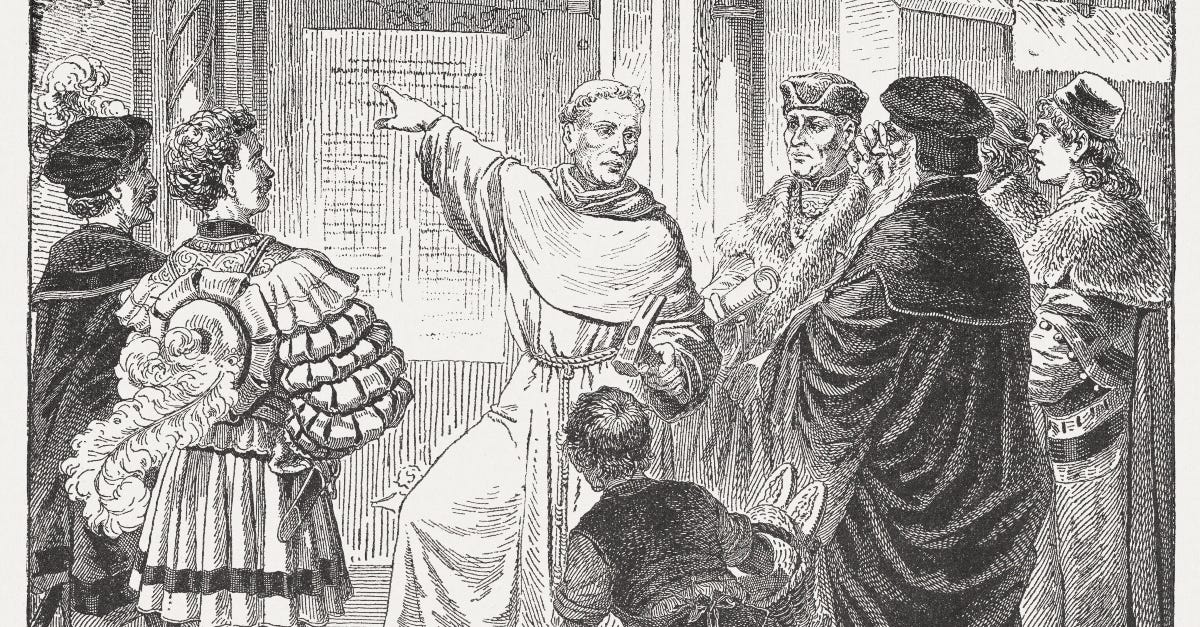
The Origin
The Christmas tree as we know it was born in 16th-century Germany, specifically among Lutheran Protestants in the region of Saxony. Before that, Christians had no trees. They had nativity scenes, they had candles, they had the winter solstice celebrations of the pagan Romans and Celts. But the evergreen tree — that was something else.
The Lutherans, breaking away from the Catholic Church, wanted a symbol that was theirs. Something that wasn’t a statue of a saint, wasn’t a crucifix in a gold frame, wasn’t the pomp of Rome. They wanted a symbol of eternal life that came from the forest, not the Vatican.
So they brought in spruce and fir trees, hung them with apples (symbolizing the Garden of Eden), and put candles on the branches. The first documented Christmas tree was set up in the Strasbourg Cathedral in 1539.
But here’s the part that gets buried under tinsel: The Lutheran tree was a protest. It was a middle finger to Catholic iconography, a declaration that the divine could be found in a living thing, not just in a consecrated wafer or a painted saint. To put a tree in a church was to say: We don’t need your permission to worship.
Who It Served
But the tree didn’t stay Lutheran for long. It spread across Germany, then to the rest of Europe, and eventually to the world. And every time it moved, it was adapted, sanitized, and commercialized.
By the 19th century, the tree had been adopted by the British royal family (Prince Albert, a German, brought it to Windsor Castle in 1841) and by American magazines that painted it as a wholesome, family-friendly tradition. The apples became glass ornaments. The candles became electric lights. The rebellion became a retail category.
The tree served the emerging consumer economy. It was a perfect product: perishable, seasonal, and emotionally charged. You couldn’t just buy it once. You had to buy it every year. And then you had to buy the decorations, the stand, the lights, the star, the tinsel. The tree became a machine for spending.
But that’s not the uncomfortable part. The uncomfortable part is what the tree was really carrying.
What It Carries
Every time you put up a Christmas tree, you are repeating a gesture of religious defiance. But not just the Lutheran one.
There is a second, stranger origin story that most people don’t know. In the 16th century, at the same time Lutherans were putting up trees in Germany, Orthodox Christians in the Ottoman Empire were doing something similar — but in secret. Under Ottoman rule, Christians were forbidden from displaying crosses or other overt Christian symbols. So they turned to the evergreen tree, a symbol that predated Christianity, and decorated it in their homes. The tree was a code. It said: I am still here. My faith is still alive. You have not erased me.
When you hang a star on your tree, you are repeating that coded gesture. The star is not just a star. It is the Star of Bethlehem, a symbol that was once illegal to display in public.
And when you put the tree in your window? You are announcing your resistance to anyone who would silence you.
The Turn
You are not decorating a tree. You are resurrecting a protest.
That tree in your living room is a survivor of two separate campaigns of suppression: one by the Catholic Church, one by the Ottoman Empire. It was smuggled into homes by people who risked punishment to keep their faith visible. It was lit with candles that could have been seen as rebellion.
And now it sits in your home, surrounded by plastic and LED lights, sold to you by a corporation that has scrubbed every trace of that history from its marketing.
The next time you look at your Christmas tree, don’t see a tradition. See a flag.
This is one story. But there are hundreds more — objects, rituals, phrases that you use every day without knowing the wars they survived, the laws they evaded, the people who hid them in plain sight. Your morning coffee. Your wedding ring. Your handshake. They are all carrying history you never asked for.