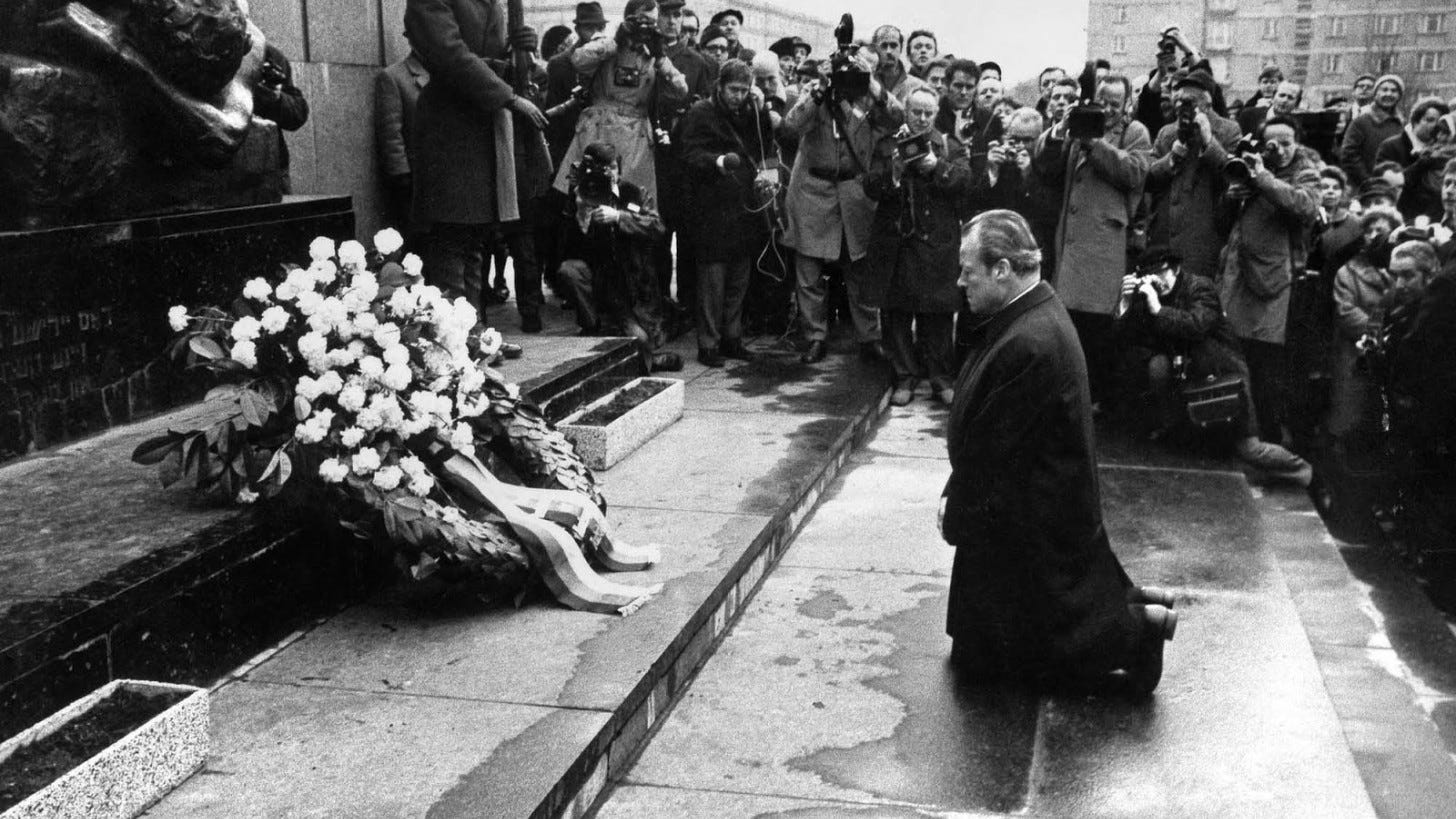
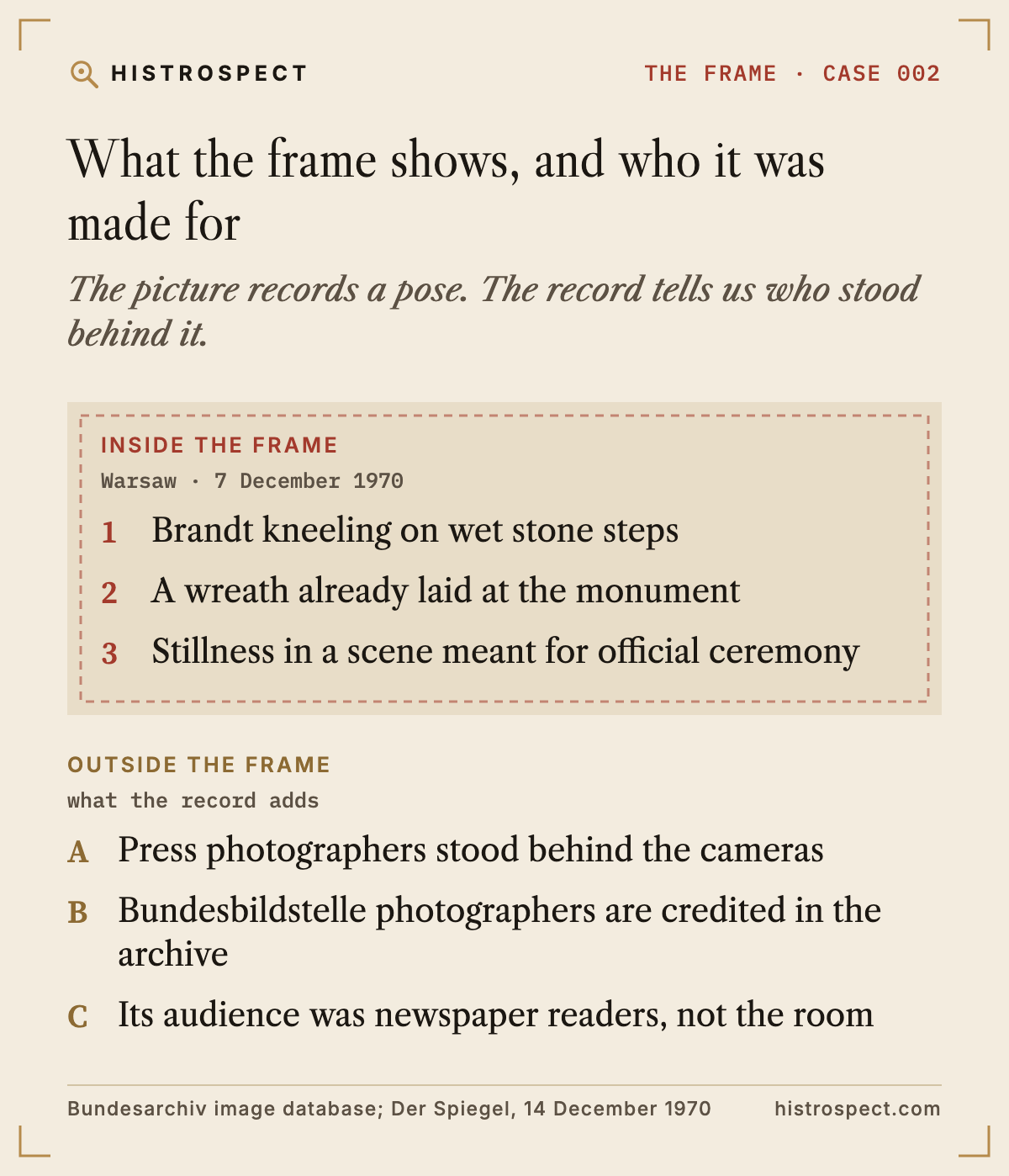
The eye goes first to the figure. A man in a dark coat is down on his knees on stone steps, and everything else in the frame seems arranged around the fact that he is lower than it. That is the first thing the picture does, and it does it before we know who he is.
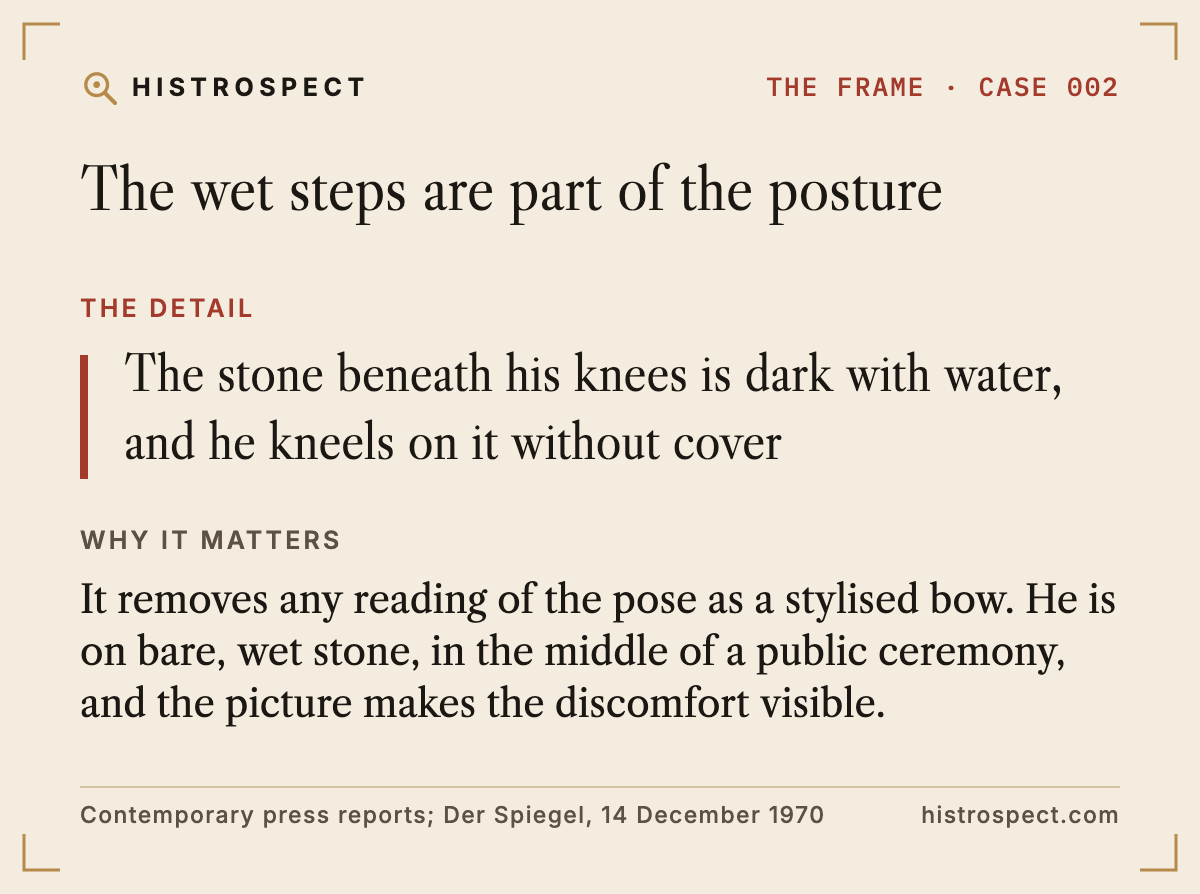
The second thing the eye finds is the ground. The steps are wet. The stone is dark and reflective where he kneels, and that detail is easy to read as weather, but it also means the kneeling cost something physical. He did not lower himself onto a cushion or a mat.
Naming the picture
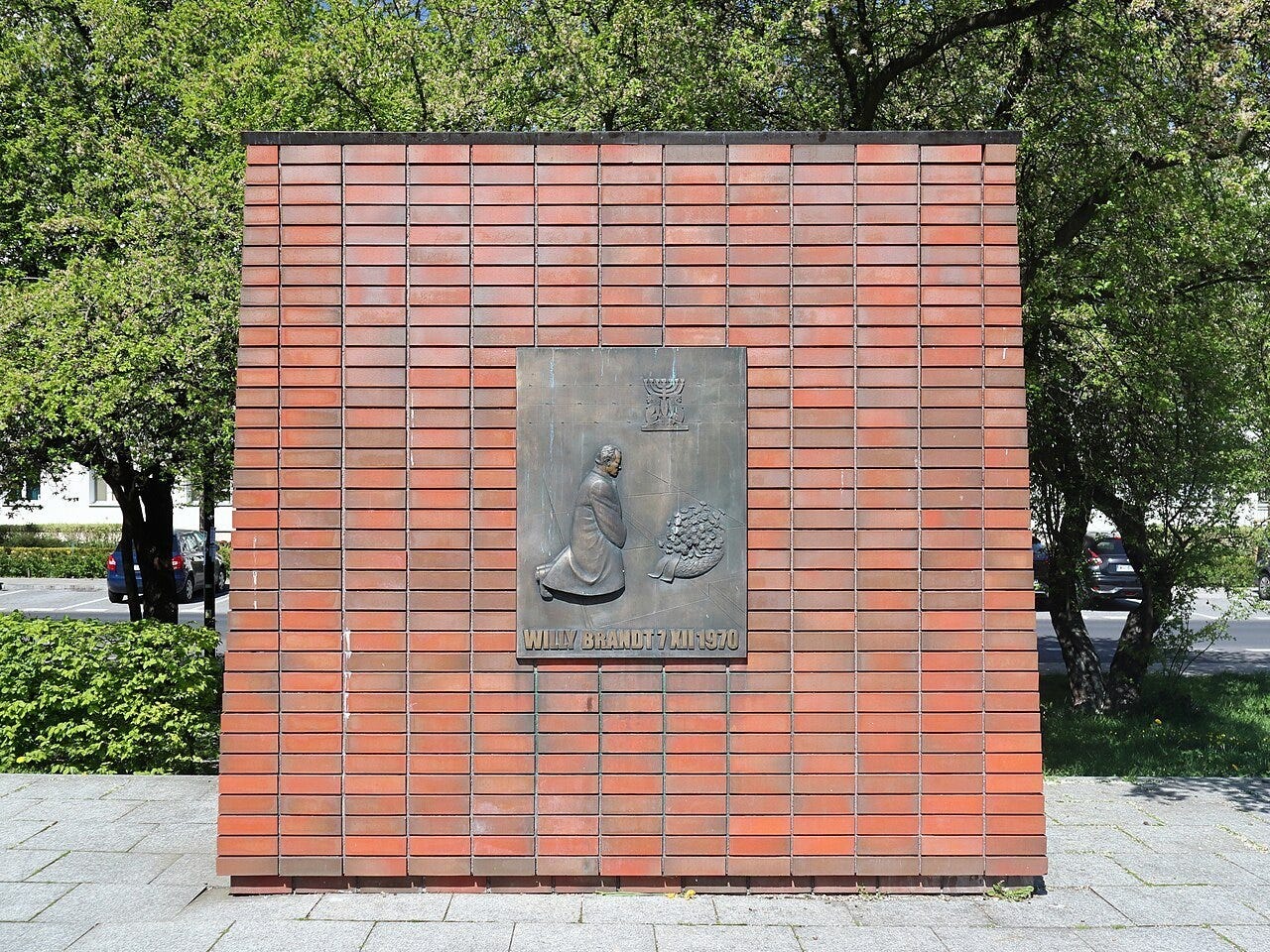
The photograph was made on 7 December 1970 in Warsaw, at the Monument to the Ghetto Heroes. The man kneeling is Willy Brandt, then Chancellor of West Germany. The image exists in several press versions, and the Bundesarchiv holds photographs of the event, including images credited to Bundesbildstelle photographers. We have not yet confirmed which photographer made which frame, or the licence of the Bundesarchiv file, so we describe rather than embed until that is settled.
That caveat matters for a close reading. A press photograph is made by someone, for someone. The credit line is part of the object.
How the picture is built
A wreath had already been laid. That is the second structural fact. The official act, the laying of flowers, is complete and visible, and the kneeling comes after it. In the frame, the wreath tells us the ceremony has been performed. The posture tells us that something further has happened.
The wreath makes the kneeling legible: it shows the scheduled gesture finished, so the unscheduled one reads as an addition rather than a substitute.
The composition is also vertical in a way that suits a newspaper page. One standing monument, one lowered body. The eye has nowhere to go except down the line of the figure. A photograph can hold only a single instant, yet the silence in Warsaw lasted about half a minute. The frame cannot show duration. What it can do is show a posture that nobody holds for a casual reason, and viewers supply the time themselves.
That is how an unplanned half-minute becomes legible to millions. The picture does not need to explain. It needs the viewer to read the body, the stone and the flowers in the right order.
Who stood behind the camera
The people who made this image were not part of the gesture. They stood where press photographers stand at an official ceremony, which means at a distance, facing the front of the figure. We do not have a documented account of who stood where, and we will not invent one. What the picture shows is the view of someone who was there to record, not to take part.
That shapes what we see. A frame made from the front shows the face and the posture together. A frame from the side would have turned the same gesture into a silhouette. Different cameras, different men. Which frame became the famous one was decided by editors, not by the person kneeling.
[INSERT PHOTO: — search: Warsaw Ghetto monument 1970 photograph]
What this piece does not settle
The picture leaves open a question it cannot answer from inside the frame: whether anyone decided on this beforehand, and what the evidence for that is. The wreath, the steps and the silence are visible. A decision is not. Nothing in the image distinguishes a planned gesture from an unplanned one, which is part of why it has been read in both ways.
We leave that question where it is. Wednesday’s Case File takes it up: it follows the orders and who relayed them, sets the official statements against the record, and separates what is documented from what remains contested.