


He is falling backward, arms thrown wide, the white cotton of his shirt plastered to his ribs by a jet of water so violent it bends bone. The photographer caught him at the moment of surrender—not a surrender to the police, but to physics. The water hits him at 100 pounds per square inch, enough to strip bark from a tree. His mouth is open. He is fifteen years old, and his name is James. The photograph will circle the globe within 48 hours. It will be called the image that turned America against segregation. But the image that turned America against segregation was never the whole truth—it was the version of the truth that white liberals could stomach.
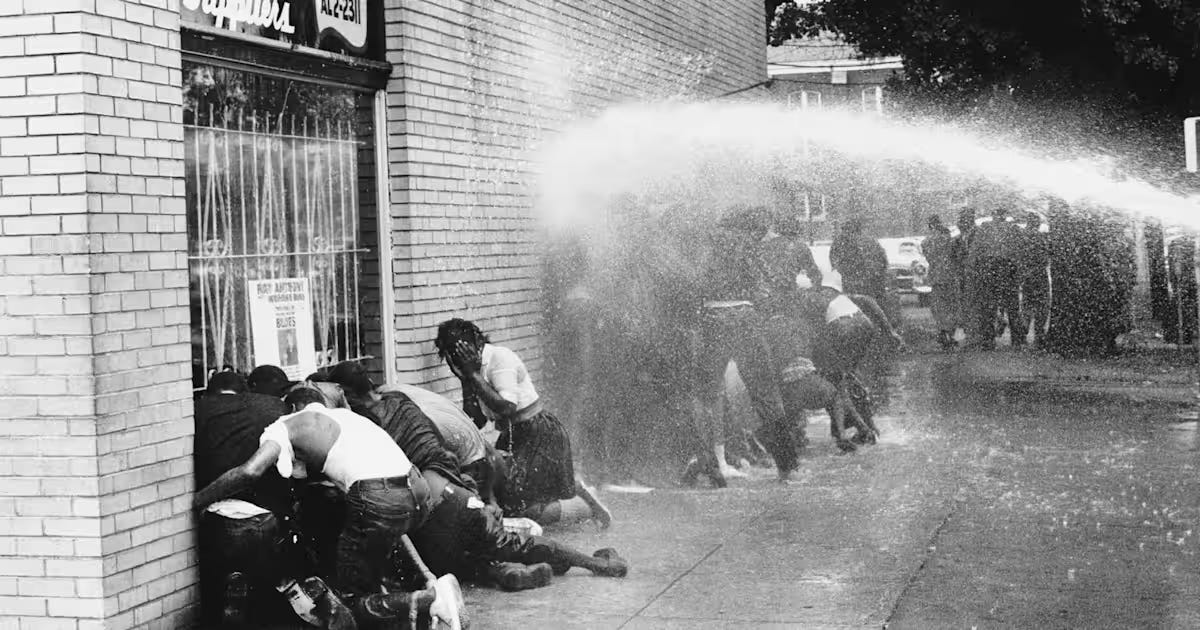
You think you see a boy being washed away by brutality. You do not see the boy who was beaten the night before, in a holding cell, by men who were never photographed. You do not see the girl who was mauled by a police dog three blocks away, her leg opened to the bone, because the wire services judged that image too graphic to print. You do not see the photographer’s assignment sheet, or the editor’s crop marks, or the State Department cable that quietly noted that this particular image—this perfect, almost aesthetic image of a dark body against a white wall of water—could be useful. You think you see a cry for justice. What you are actually seeing is a negotiation: between the movement’s need for sympathy and the nation’s tolerance for the truth.
What you are about to read is the story that the frame was designed to hide. The cropped-out context. The missing faces. The violence that was deemed unphotographable. The system that needed this image to exist—and needed the real violence to disappear.

