


We begin not with the storm itself, but with the deceptive calm that preceded it—the intellectual paradise where credit was first codified as a moral imperative rather than a mathematical shackle.
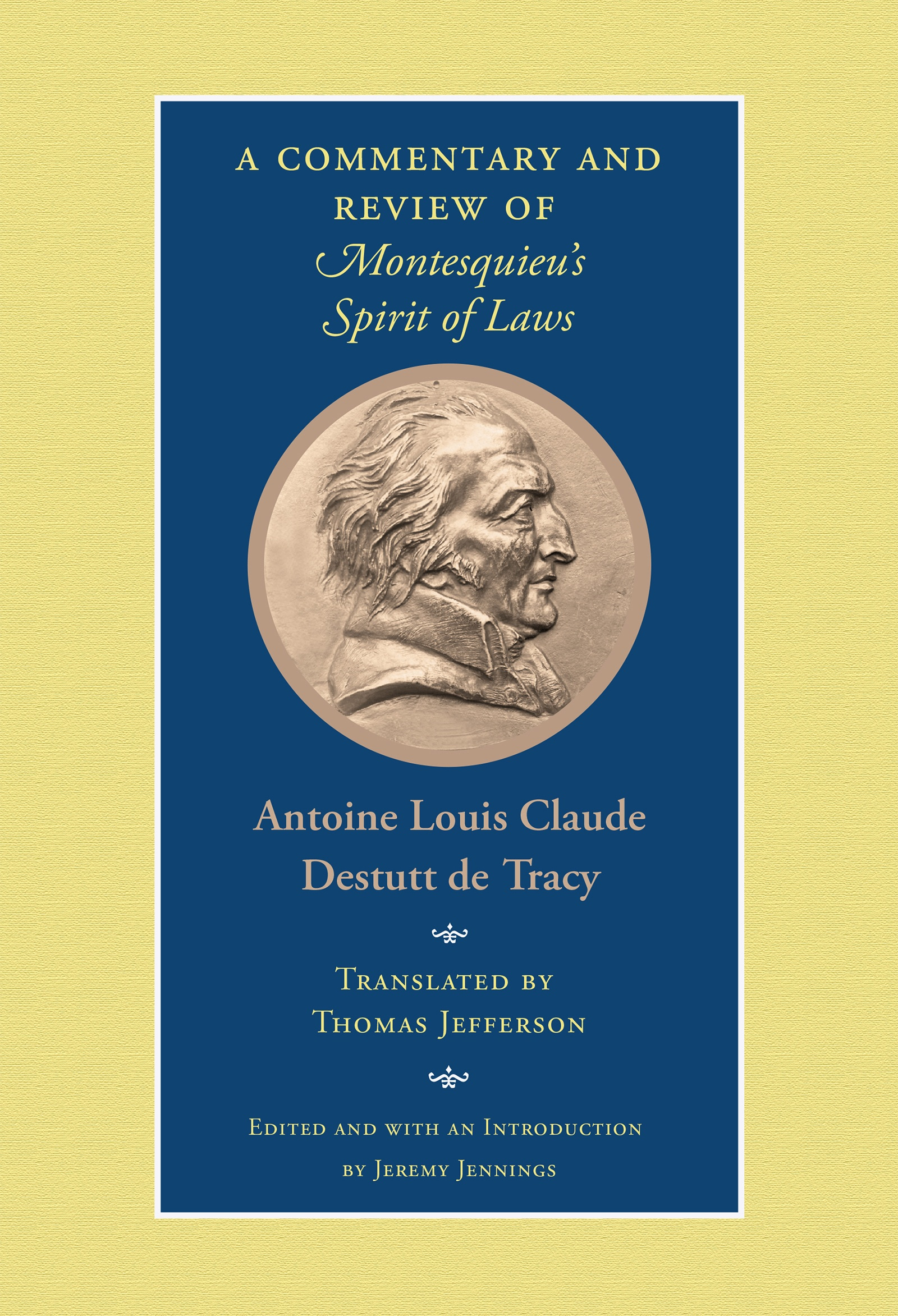
Before the printing press became a weapon of mass inflation, it was a tool of enlightenment. The image above—a pristine cover of *A Commentary and Review of Montesquieu’s Spirit of Laws*, translated by none other than Thomas Jefferson—represents the embryonic stage of the modern economic soul. Here, Antoine Destutt de Tracy, the father of ‘Ideology,’ laid the groundwork for a liberal economy where commerce was intended to cure destructive prejudices. This text is the artifact of a time when the Western mind believed that the circulation of money would inevitably lead to the circulation of liberty.
Jefferson’s involvement is not merely incidental; it is foundational. It signals the transfer of the Enlightenment’s financial optimism from the decaying monarchies of Europe to the fertile, unburdened soil of the Americas. They viewed the ‘Spirit of Laws’ as a mechanism to bind society together through mutual obligation—credit, in its purest etymological sense of *credo* (I believe). They did not foresee that this intellectual architecture, designed to liberate human will, would eventually evolve into a towering structure of sovereign debt that constricts the very liberty it sought to fund.
THE INK ON THESE PAGES DRIED LONG BEFORE THE BLOOD IT WOULD EVENTUALLY COST. WE ARE LOOKING AT THE BLUEPRINT OF A TRAP DISGUISED AS A KEY.
The silence in this image is deafening. It is the silence of the library before the trading floor opens. It is the naive ‘Paradise’ from which the wind of progress begins to blow, filling the wings of the Angel of History with a force it can no longer control. The book represents the era of *hard thought* before the era of *easy money*.
II. The Wind of Progress: The Subversive Logistics of Freedom
As the wind of progress gathered speed in the 19th century, it did not merely blow through the marble halls of banks; it howled across the American landscape, demanding infrastructure.
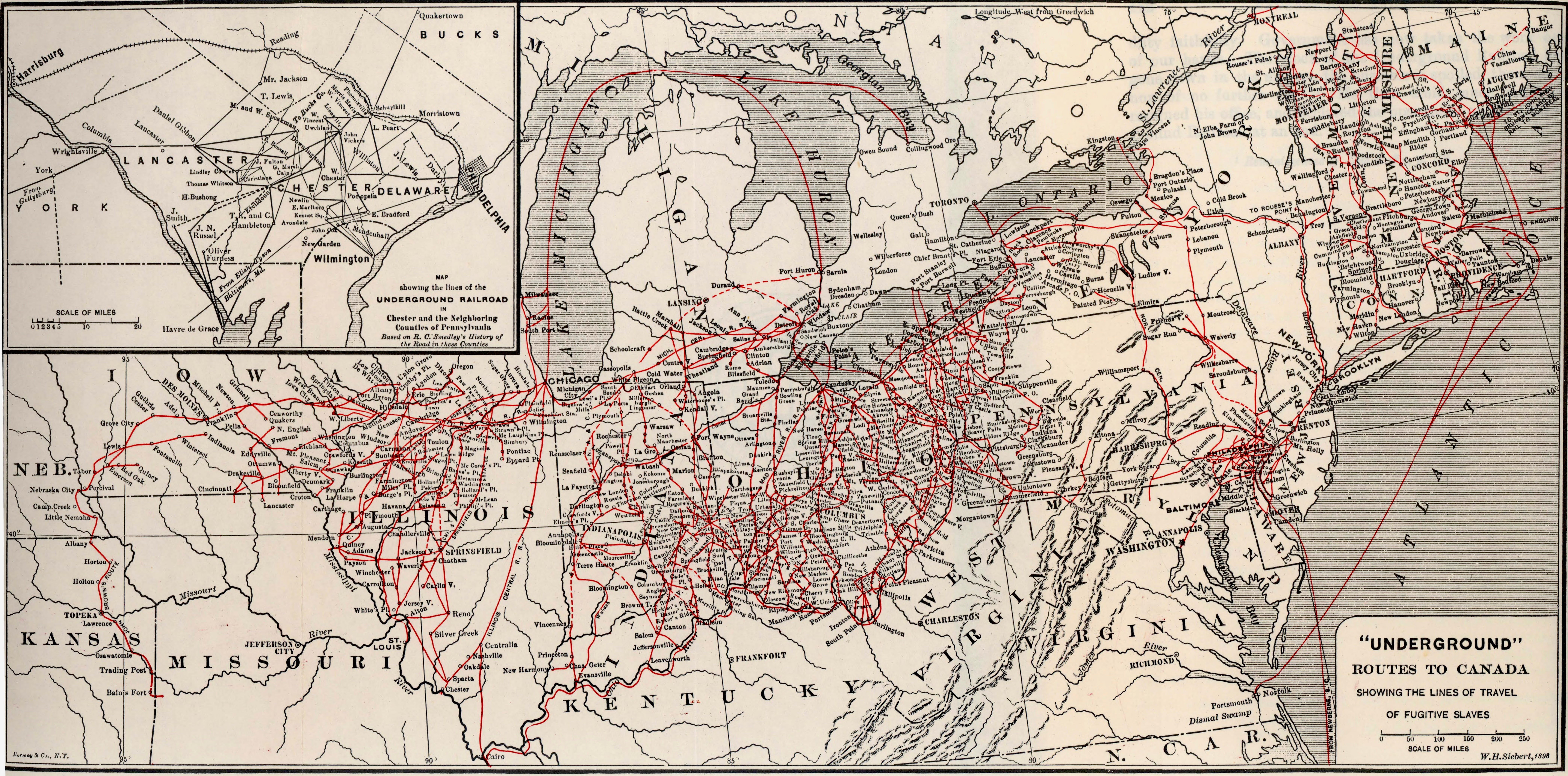
While Wall Street and London financiers were busy floating bonds to lay iron rails across the continent—monetizing the physical conquest of space—a different, far more volatile network was being etched into the geography of the United States. This map of the ‘Underground Railroad’ serves as a stark, contrasting visual to the typical railway bond. This represents the shadow economy of the 19th century: a logistical masterpiece built not on debt and interest, but on risk and human capital.
Observe the density of the lines in Ohio and Pennsylvania. These are not merely routes of travel; they are fractures in the economic consensus of the era. The dominant economy of the South—built on the collateralization of human bodies—was being bled dry by this invisible infrastructure. The ‘Wind of Progress’ here is the storm of liberation, blowing fugitive assets (in the eyes of the law) toward the Canadian border. It is crucial to understand this map as a *financial document* of negative value to the slave-holding aristocracy. Every line represents a defaulted asset, a breakdown of the ‘property rights’ that Montesquieu and Jefferson debated.
TRUE INFRASTRUCTURE IS NOT ALWAYS BUILT OF IRON AND STEAM. SOMETIMES IT IS BUILT OF SILENCE, MOONLIGHT, AND THE SYSTEMATIC THEFT OF CAPITAL FROM A MORALLY BANKRUPT SYSTEM.
The ‘Underground Railroad’ was the counter-market. While the visible market traded bonds to build the B&O Railroad, this invisible market traded safety to dismantle the plantation economy. It illustrates that the ‘storm’ of history is not just about the accumulation of wealth, but the violent friction between opposing economic systems.
III. The Horizon of the Storm: The Architecture of Hubris
As the networks of the 19th century coalesced into the globalized systems of the 20th, the ambition of central planners grew from terrestrial logistics to celestial defiance.
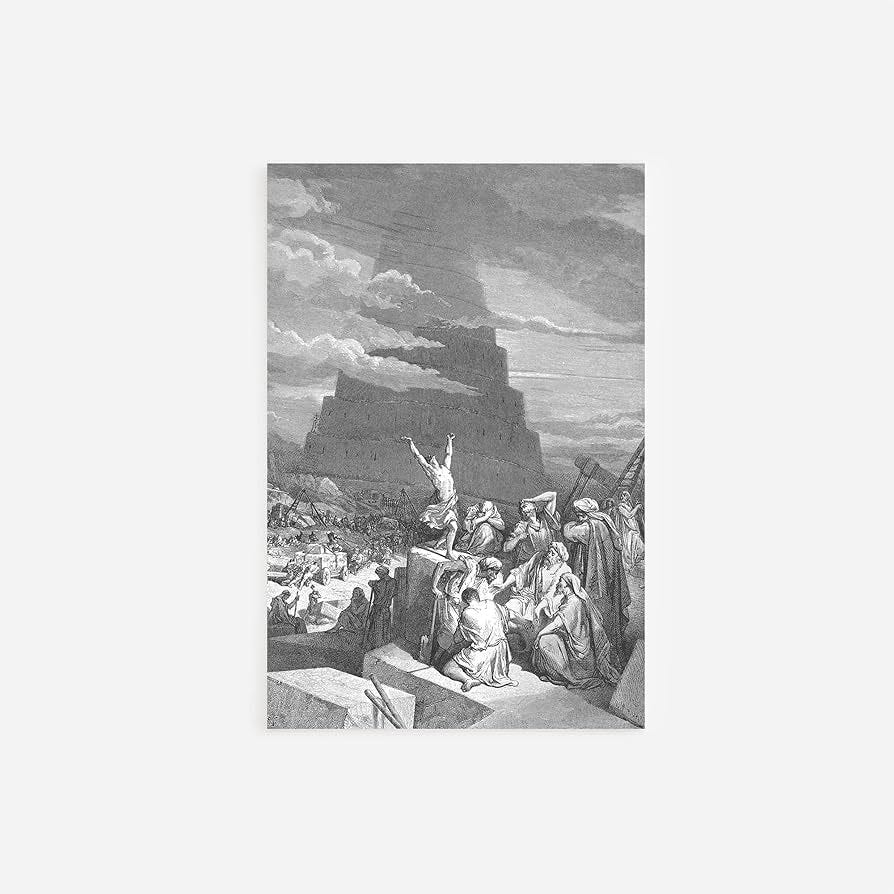
Gustave Doré’s The Confusion of Tongues serves as the perfect allegorical representation of the modern financial system at its zenith. We see here the ‘Horizon of the Storm’—the moment when the accumulation of debt and complexity reaches a structural tipping point. The tower is vast, spiraling, and unfinished, much like the derivatives market or the sovereign debt obligations of the G7 nations. The figures at the base are tiny, overwhelmed by the masonry of their own making.
This engraving captures the futility of infinite growth in a finite world. The builders intended to reach heaven—to achieve a state of permanent prosperity free from the cycles of correction—but instead, they achieved confusion. In the context of macro-history, this is the central bank era. We have built a Tower of Babel out of fiat currency, where the languages of value—price signals, interest rates, risk premiums—have become hopelessly garbled.
The crumbling stone in the foreground is prophetic. It suggests that the higher the leverage, the more unstable the foundation. The storm that began with the optimistic philosophy of the Enlightenment and accelerated through the industrial networks of the 19th century now swirls around this impossible edifice.
WE ARE NO LONGER BUILDING FOR UTILITY; WE ARE BUILDING TO POSTPONE THE COLLAPSE. THE SCAFFOLDING HAS BECOME MORE PERMANENT THAN THE BUILDING ITSELF.
IV. The Modern Maelstrom: When Paper Becomes Debris
Finally, the tower falls. The storm lands. The abstraction of ‘value’ crashes into the hard reality of arithmetic.

Here lies the debris of the 20th century’s final act: the physical manifestation of hyperinflation. This fan of Zimbabwean ‘Agro-Cheques’ and bearer notes is the graveyard of trust. Notice the specific denominations: *One Hundred Billion Dollars*. *Fifty Billion Dollars*. These are not numbers; they are screams of panic printed on security paper. The ‘Special Agro-Cheque’ text is a particularly cynical attempt by a failing state to tie its worthless currency to the tangibility of agriculture, even as the farms were being seized and the economy hollowed out.
This image is the direct inverse of the Jefferson/Destutt de Tracy book. Where the book represented the *idea* of credit as a bond of trust, these notes represent the *reality* of credit as a weapon of state survival. The blue and red inks, the intricate guilloché patterns, the watermarks—all the aesthetic trappings of authority are present, yet the value is zero. This is what happens when the Angel of History can no longer fly against the wind: she is buried under a pile of worthless paper.
The transition is complete. We have moved from the philosophical ‘Paradise’ of credit, through the ‘Railroads’ of industrial friction, past the ‘Babel’ of centralized hubris, and landed here: holding a hundred billion dollars that cannot buy a loaf of bread.
ZEROES ARE THE TOMBSTONES OF VALUE. THE MORE YOU SEE ON A BANKNOTE, THE CLOSER THE ECONOMY IS TO THE GRAVE.