


The document before us is far more than a geographical reference; it is the legal and architectural schematic for a century of environmental weaponization and relentless geopolitical friction.
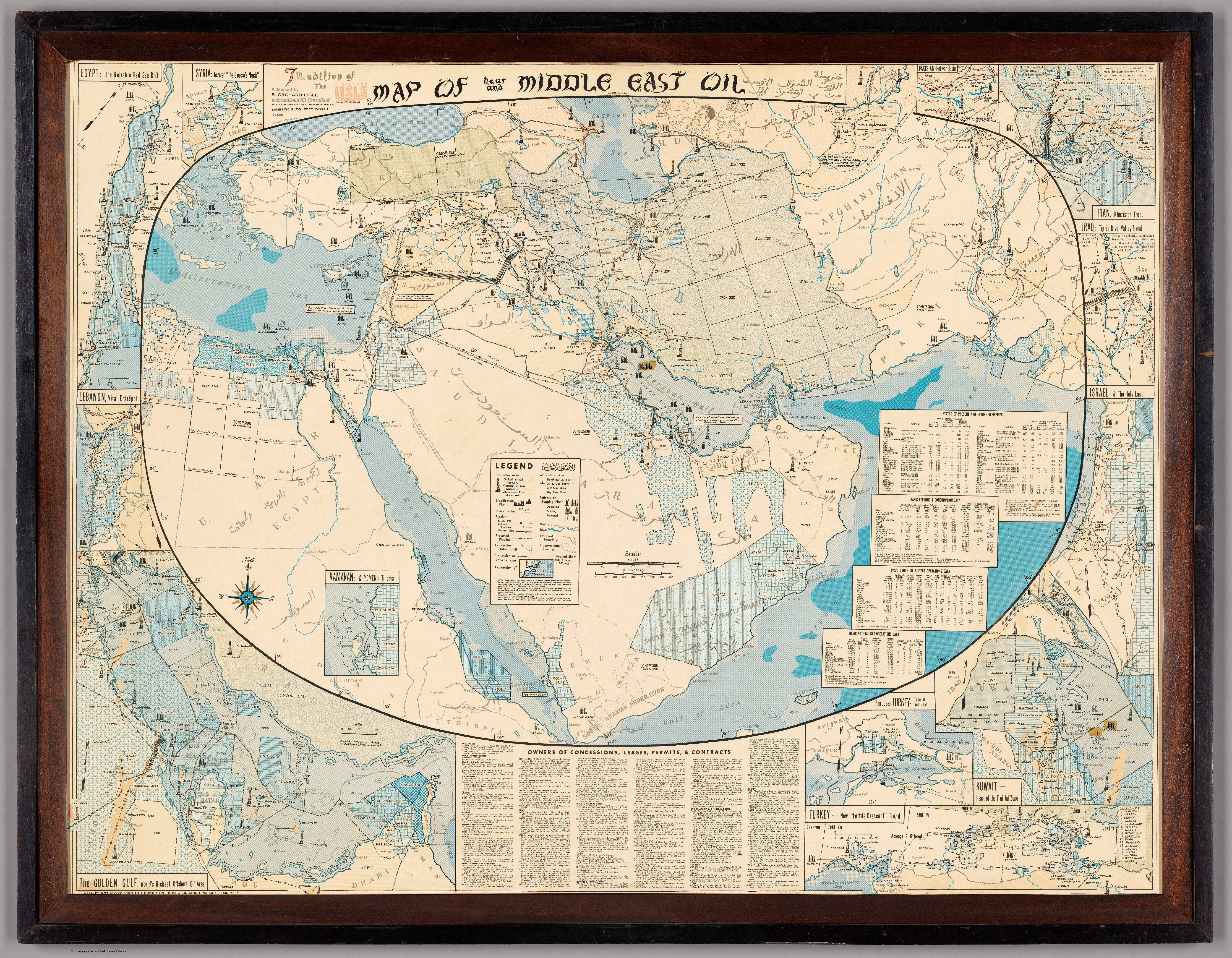
The 7th edition of the ‘Map of Near and Middle East Oil,’ published by B. Orchard Lisle, represents the zenith of mid-twentieth-century Western petro-cartography. To the untrained eye, it is a complex web of pipelines, refineries, and concession zones, meticulously demarcated to track the flow of crude from the subterranean reservoirs of the Persian Gulf to the energy-hungry industrial centers of the West. However, when viewed through the lens of deep historical strategy, this map is a ledger of impending violence. It traces the exact coordinates where energy warfare would inevitably ignite. The lines drawn on this map are not borders of sovereignty, but fault lines of inevitable combustion, preordaining a future where crude oil would be weaponized against the earth’s very atmosphere. By legally commodifying the desert crust, cartographers inadvertently drafted the blueprints for decades of proxy wars, pipeline sabotages, and state-sponsored ecological terrorism.
The sheer density of infrastructure mapped across Khuzestan, the Eastern Province of Saudi Arabia, and the Tigris River Valley illustrates a fragile, highly concentrated arterial system. Every red line representing a projected pipeline, every symbol denoting a topping plant or a stabilization facility, is a vulnerability waiting to be exploited. The map formalizes the division of the Middle East not by ethnic, linguistic, or historical realities, but by the voracious appetites of state monopolies and the descendants of the Seven Sisters. It perfectly encapsulates the ‘Red Line Agreement’ mentality, where diplomats and oil executives carved up the remnants of the Ottoman Empire based purely on geological potential, utterly indifferent to the socio-political tectonic plates they were shifting. This clinical abstraction of land into mere extraction zones set the stage for the literal ‘black rain’ that would eventually fall over Tehran, Baghdad, and Kuwait City during the mechanized slaughters of the late 20th century. When infrastructure of this scale is contested, the environment itself becomes the primary battlefield.
“The map is not the territory; it is the target. By mapping the subterranean lifeblood of the industrialized world, Western powers provided their adversaries with a precise menu of targets to hold the global economy hostage.”
The rationale for understanding this document lies in the concept of atmospheric decay. The map lists ‘Wildcatting Areas’ and ‘Significant Oil Shows’ with a sterile precision that deliberately obscures the catastrophic consequences of drilling, refining, and defending these resources. During the Iran-Iraq War, and later the Gulf War, the infrastructure painstakingly plotted on this map was systematically detonated. Refineries were bombed into toxic infernos, and hundreds of oil wells were intentionally set ablaze, turning the sky into a suffocating canopy of soot and sulfur. The ‘black rain’ that fell upon the populations of these regions was the direct, kinetic realization of the borders and concessions drawn by men in distant boardrooms decades prior. The environmental warfare was not an accident; it was the logical conclusion of building a global economic pillar on top of a highly volatile, deeply contested geography. The map shows the oil, but it does not show the suffocating fallout when that oil is used as a weapon of mass ecological denial.
Crucially, we must ask: Who is NOT visible in this image, and why? The indigenous populations, the nomadic tribes, and the local ecosystems are entirely erased from this cartographic representation. The land is presented as a ‘terra nullius’ of pure commodity, waiting to be pierced and drained. The map categorizes the earth solely by its yield, rendering the human inhabitants invisible. Furthermore, the geopolitical architects who drew these boundaries—the diplomats, the corporate lawyers, the financiers in London and New York—are absent. Their hands guided the pen, but they shielded themselves from the blast radius. By omitting the human element, the map serves as a supreme tool of psychological detachment, allowing policymakers to view the Middle East as a vast, mechanized chessboard rather than a populated, living region. This calculated invisibility facilitated the ruthless suppression of nationalist movements that dared to challenge the concessionary borders, ensuring that the oil flowed, regardless of the blood spilled to secure it. The absence of the local populace on this map is a deliberate strategy of disenfranchisement, reinforcing the imperial narrative that the resources belonged to those capable of extracting and mapping them, rather than those living upon them.
Steel Coffins in the Strait: The Calculus of Maritime Strangulation and the Tanker War
The blackened, listing hull of the vessel captured in this chaotic, high-contrast exposure is the kinetic manifestation of the map’s abstract vulnerabilities.
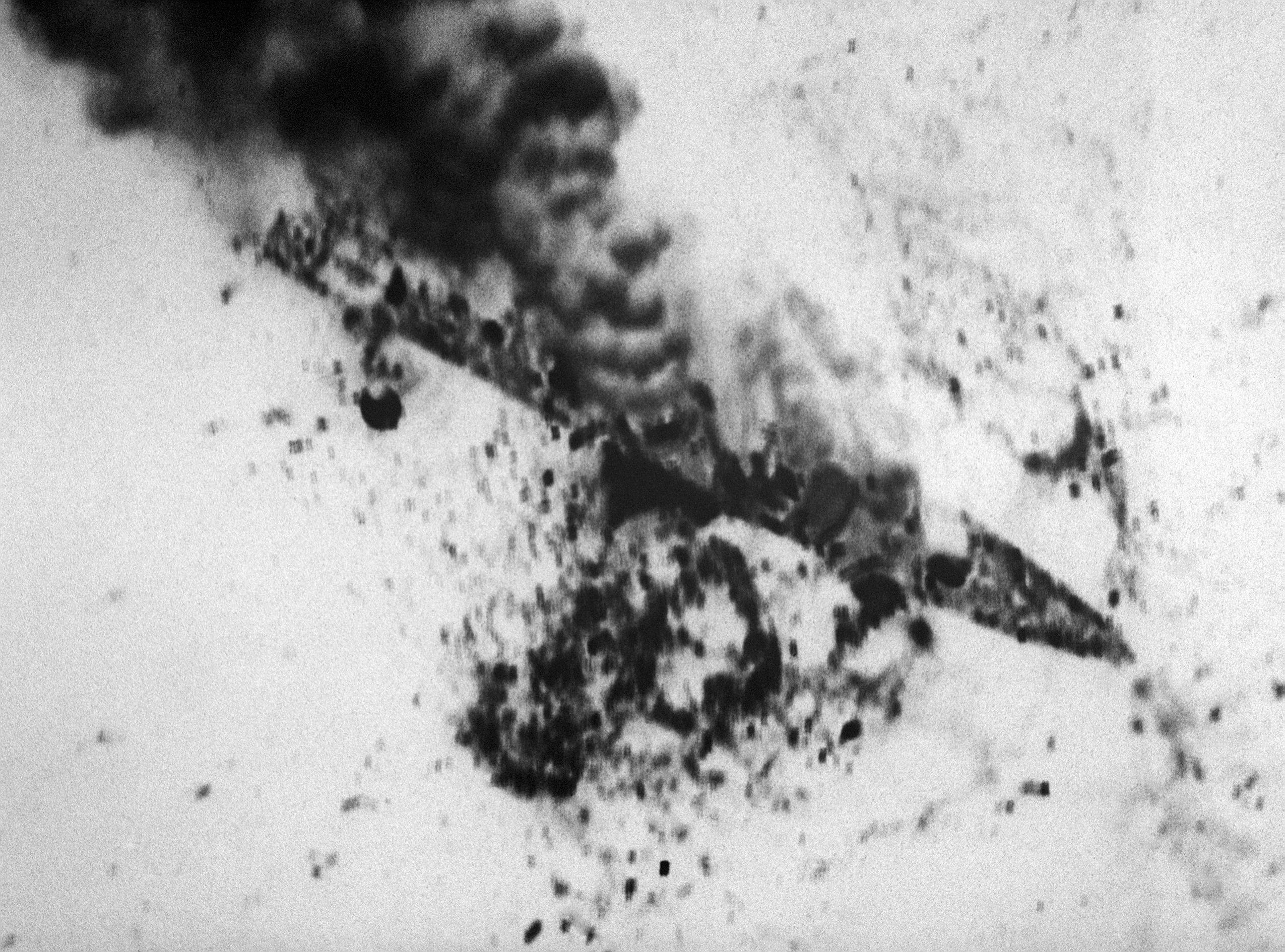
This is the maritime chokepoint weaponized. The grainy photograph of a merchant tanker engulfed in smoke and fire is not merely an image of a destroyed ship; it is a profound visual testament to the strategic fragility of global energy supply chains. During the protracted and brutal Iran-Iraq War of the 1980s, the conflict spilled from the static trench warfare of the borderlands into the vital waterways of the Persian Gulf, birthing what became known as the ‘Tanker War.’ This phase of the conflict fundamentally altered the doctrine of economic warfare. Unrestricted targeting of merchant shipping in the Strait of Hormuz and the wider Gulf was not simply a tactic of mutual denial between Tehran and Baghdad; it was a calculated attempt to asphyxiate the global nervous system. By turning the Persian Gulf into a maritime slaughterhouse, belligerents discovered that attacking a single floating citadel of crude could trigger immediate, paralyzing spikes in global insurance premiums. The true target was never the steel hull of the ship itself, but the psychological threshold of the international commodities market, proving that disruption is often more potent than destruction.
The photograph perfectly encapsulates the vulnerability of the Very Large Crude Carrier (VLCC). These massive vessels, some of the largest moving objects ever constructed by human engineering, were designed for economies of scale, not survivability. Loaded with hundreds of thousands of tons of highly volatile crude oil, they lumbered through the narrow, shallow waters of the Persian Gulf with minimal maneuverability and zero defensive armament. They were, in essence, floating geopolitical hostages. When Iraq initiated the Tanker War by using French-built Super Étendard aircraft armed with Exocet anti-ship missiles to strike Iranian oil terminals and tankers at Kharg Island, Iran retaliated by targeting ships trading with Kuwait and Saudi Arabia, utilizing speedboats, sea mines, and shore-based Silkworm missiles. The resulting conflagrations, as captured in the image, forced the international community to confront a terrifying reality: the lifelines of Western capitalism were at the mercy of asymmetrical warfare. The destruction of these vessels was intended to exert intolerable pressure on the patrons of the opposing side, forcing foreign intervention not through direct military threat, but through the unacceptable prospect of economic collapse.
“A burning tanker in the Strait of Hormuz does not merely leak oil into the sea; it bleeds terror into the global markets. It is the ultimate asymmetric lever, where a cheap missile dictates the cost of civilization’s lifeblood.”
The historical precedent established here is paramount for understanding modern naval strategy in confined waters. The inability of neutral merchant shipping to safely navigate international straits led to unprecedented geopolitical maneuvering, most notably Operation Earnest Will in 1987, where the United States Navy began reflagging and escorting Kuwaiti oil tankers. This marked a massive escalation in direct Western military involvement in the Gulf, proving that the weaponization of a chokepoint will inevitably drag global superpowers into regional bloodlettings. The smoldering ship in the photograph represents the death of the illusion of ‘free trade’ in contested zones. It proves that the freedom of navigation is not a natural right, but a condition that must be enforced by overwhelming, continuous naval dominance. The charred wreckage is a monument to the harsh truth that maritime law is suspended the moment state survival is threatened, and that the ocean’s surface is as violently contested as any territorial border.
Once again, we must analyze the invisible elements: Who is NOT visible in this image, and why? Invisible in the smoke are the Lloyd’s of London actuaries, who sat safely in the UK, adjusting war-risk premiums that dictated the flow of global commerce more effectively than any naval blockade. Also entirely absent are the expendable, multinational crews—often underpaid sailors from the Philippines, India, or Eastern Europe—who manned these floating bombs. These merchant mariners were treated as disposable biological components of the maritime machinery, their lives weighed against the price per barrel. The geopolitical architects who insured these vessels, the proxy actors who armed the combatants, and the invisible hands of the global commodities market that absorbed the shock of these burning ships remain hidden behind the spectacle of the explosion. The camera captures the kinetic strike, but it deliberately ignores the cold, calculated economic algorithms that sent the ship into the crossfire in the first place. The tragedy is framed purely as an industrial accident of war, intentionally obscuring the systemic exploitation of maritime labor required to keep the arterial system of global energy functioning amidst total war.