


History often hides in the mundane details of administration. To understand the machinery of the Tuskegee Study, one must look not at the medical charts initially, but at the marketing. The document presented here is not a medical referral; it is a hunting license disguised as benevolence.
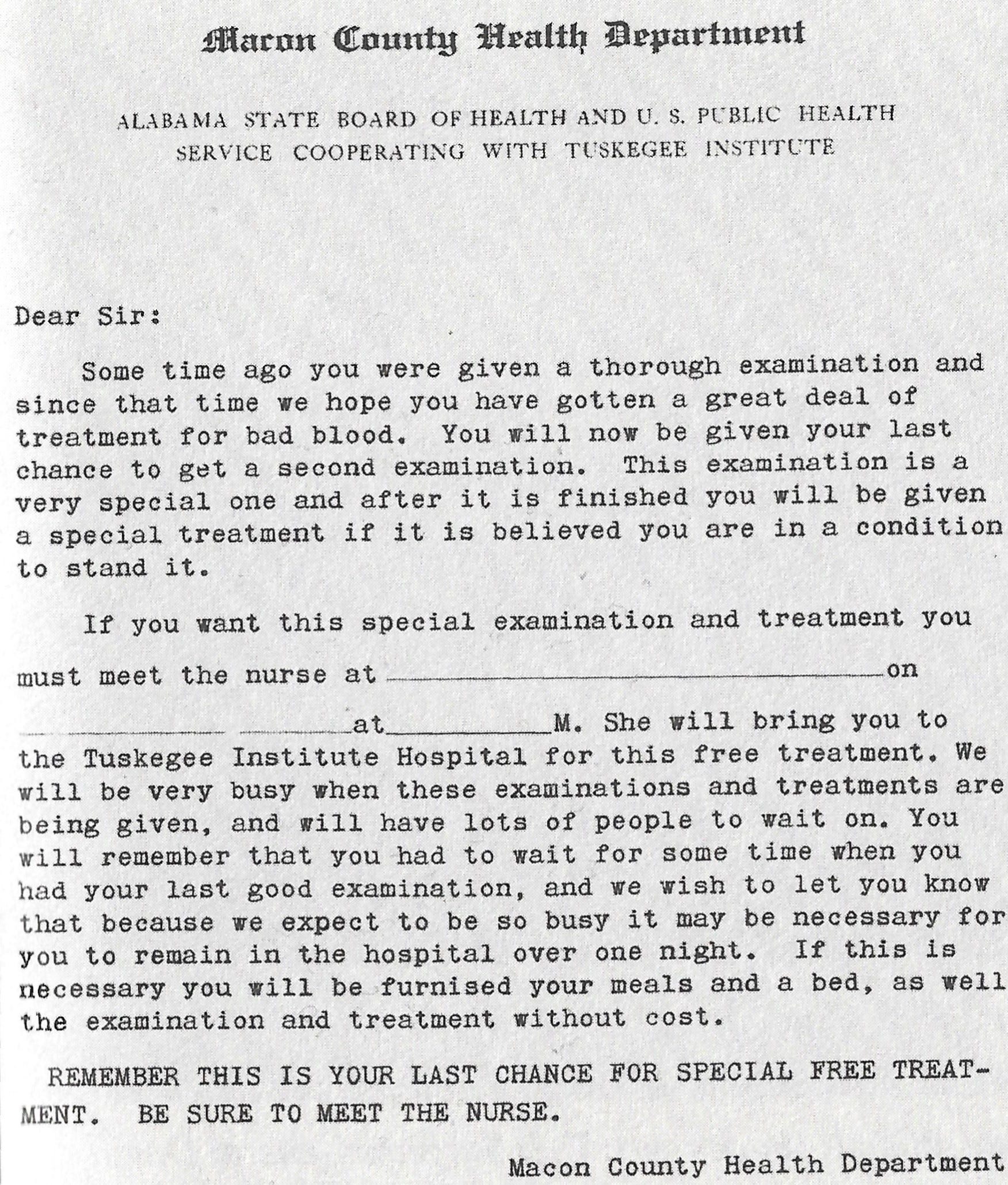
Analyze the typography of the Macon County Health Department letter. It mimics the aesthetic of care—clean lines, official headers, the invocation of the ‘Alabama State Board of Health’ and the ‘U.S. Public Health Service’ cooperating with the ‘Tuskegee Institute.’ This triangulation of authority was essential. It required the complicity of local trusted institutions to bypass the skepticism of the subjects. The language is predatory in its precision. Note the phrase: ‘You will now be given your last chance to get a second examination.’ This urgency is a fabrication designed to induce compliance through scarcity. They were not offering a cure; they were offering a spinal tap, marketed under the euphemism of ‘special treatment.’
THE BANALITY OF EVIL WEARS A LETTERHEAD. THE BUREAUCRACY DID NOT MERELY DOCUMENT THE DYING; IT CHOREOGRAPHED IT.
The text promises that ‘you will be furnished your meals and a bed,’ leveraging the poverty of the Depression-era Sharecropper against his own bodily autonomy. This letter is the smoking gun of informed consent’s antithesis. It proves that the study was not a passive observation of the ‘natural course’ of syphilis, but an active entrapment. The lie of ‘free treatment’ was the bait; the man’s body was the catch. Who is invisible here? The doctors who drafted this text. They hide behind the passive voice—’you will be given,’ ‘it is believed’—absolving themselves of agency while sentencing men to slow, neuro-degenerative deaths.
The Colonized Archive: Reclaiming the Narrative from the Data
For forty years, the men of the study were reduced to ‘clinical material.’ Their humanity was stripped away, layer by layer, until they were nothing more than hosts for a disease the government wished to map. The intellectual architecture of this dehumanization aligns chillingly with Frantz Fanon’s theories on the colonial gaze: the colonized subject is seen not as a person, but as a biological incident.

Here, we see the rupture of that colonial gaze. Pictured is Lillie Tyson Head, daughter of study subject Freddie Lee Tyson, alongside a researcher. This image represents the transition from ‘subject’ to ‘archivist.’ In the background, the shelves of history; in the foreground, the living legacy of the survivors. The state viewed the men as disposable data points; their descendants view them as fathers, martyrs, and evidence. The woman’s gaze is direct, challenging the camera, a stark contrast to the clinical photography of the 1930s which often depicted the men naked, headless, or focused solely on their lesions.
WHEN THE STATE TREATS A POPULATION AS A PETRI DISH, SURVIVAL BECOMES AN ACT OF RESISTANCE. MEMORY BECOMES A WEAPON AGAINST ERASURE.
This visual counters the ‘public health myth’ established in the previous section. It forces us to confront the human cost of the ‘Fanonian’ alienation—where the medical establishment, predominantly white, projected its scientific curiosity onto Black bodies, rendering the men aliens in their own land. The presence of the descendants in the archive signals the end of the state’s monopoly on the truth. They are the guardians of the uncomfortable history that the letter in the previous section attempted to sanitize.
The Silent Protagonist: The Biology of Betrayal
While the bureaucrats wrote letters and the families prayed for cures, a third actor was at play. To understand the magnitude of the betrayal, we must look the killer in the eye. This was the entity the U.S. Public Health Service protected more vigorously than the citizens they were sworn to serve.
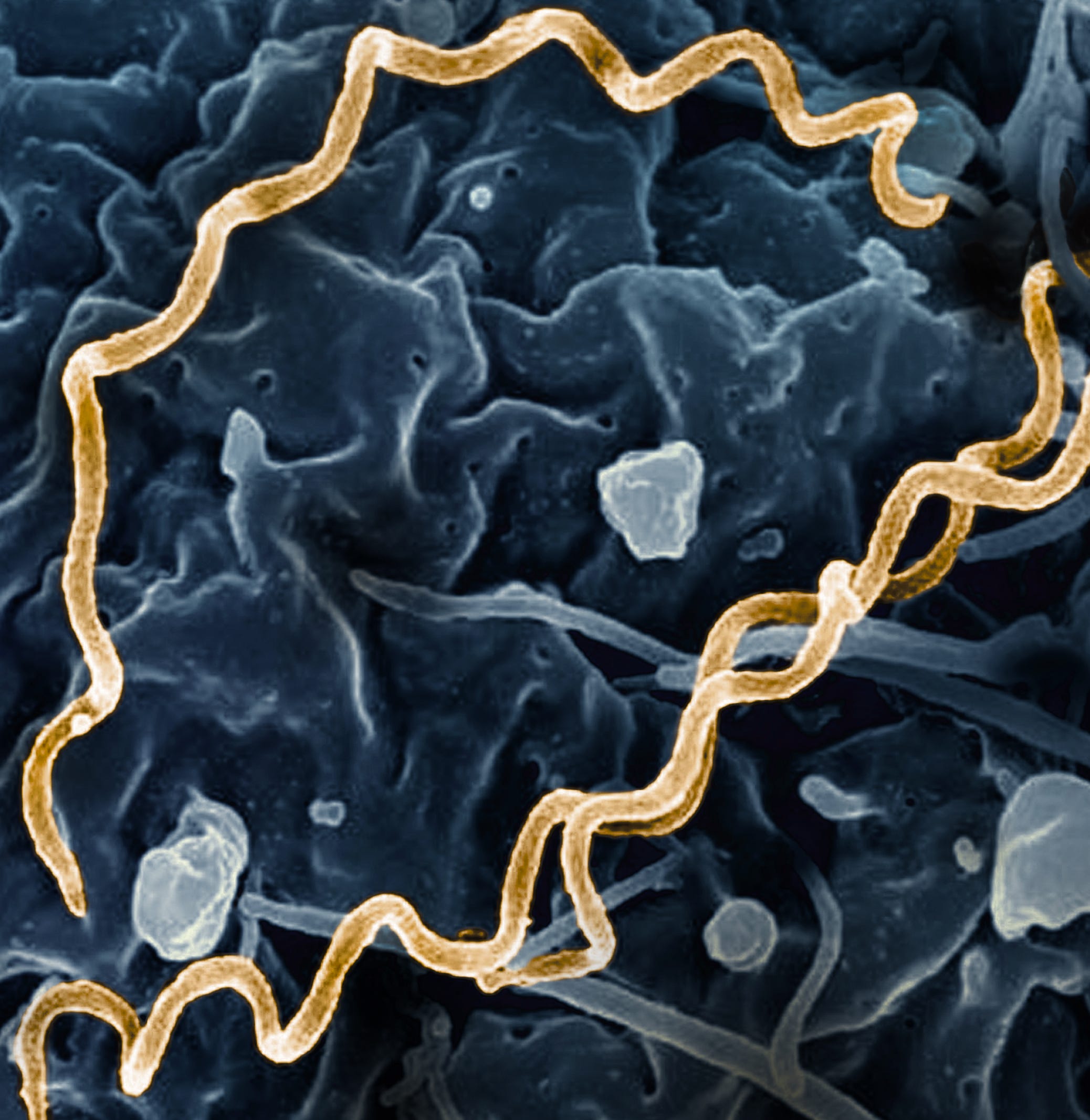
This false-color electron micrograph reveals *Treponema pallidum*, the spirochete bacterium responsible for syphilis. In the logic of the study, this organism was the protagonist. The Black men were merely the soil in which it was allowed to grow. The doctors were fascinated by the spiral efficiency of the bacteria—how it bored into the aortic arch, how it ate away at the neural pathways, how it mimicked other diseases. The decision to withhold penicillin in the 1940s was not an administrative oversight; it was a decision to privilege the lifecycle of this bacteria over the life of the human host.
THEY WATCHED THE BACTERIA DEVOUR THE MEN WITH THE DISPASSIONATE CURIOSITY OF A BOTANIST WATCHING A VINE STRANGLE A TREE.
The visual beauty of the micrograph belies its horror. This ‘corkscrew’ shape allows the pathogen to burrow into deep tissues, hiding from the immune system, causing the tertiary symptoms—blindness, insanity, cardiovascular collapse—that the doctors meticulously recorded but refused to stop. This image illustrates the ‘Whistleblower’s Rupture’ not by showing the whistleblower himself, but by showing the *reason* the whistle had to be blown. The unmitigated spread of this organism was a state-sponsored biological crime. The visual evidence of the pathogen serves as an indictment of the medical voyeurism that defined the study.
The Theatre of Atonement: Institutionalizing the Memory
Decades after the last letter was sent and the spirochetes had done their work, the state was forced to speak. On May 16, 1997, President Bill Clinton issued a formal apology to the survivors. But an apology from the state is never a simple act of contrition; it is a complex political performance designed to close a wound that threatens the legitimacy of the institution.
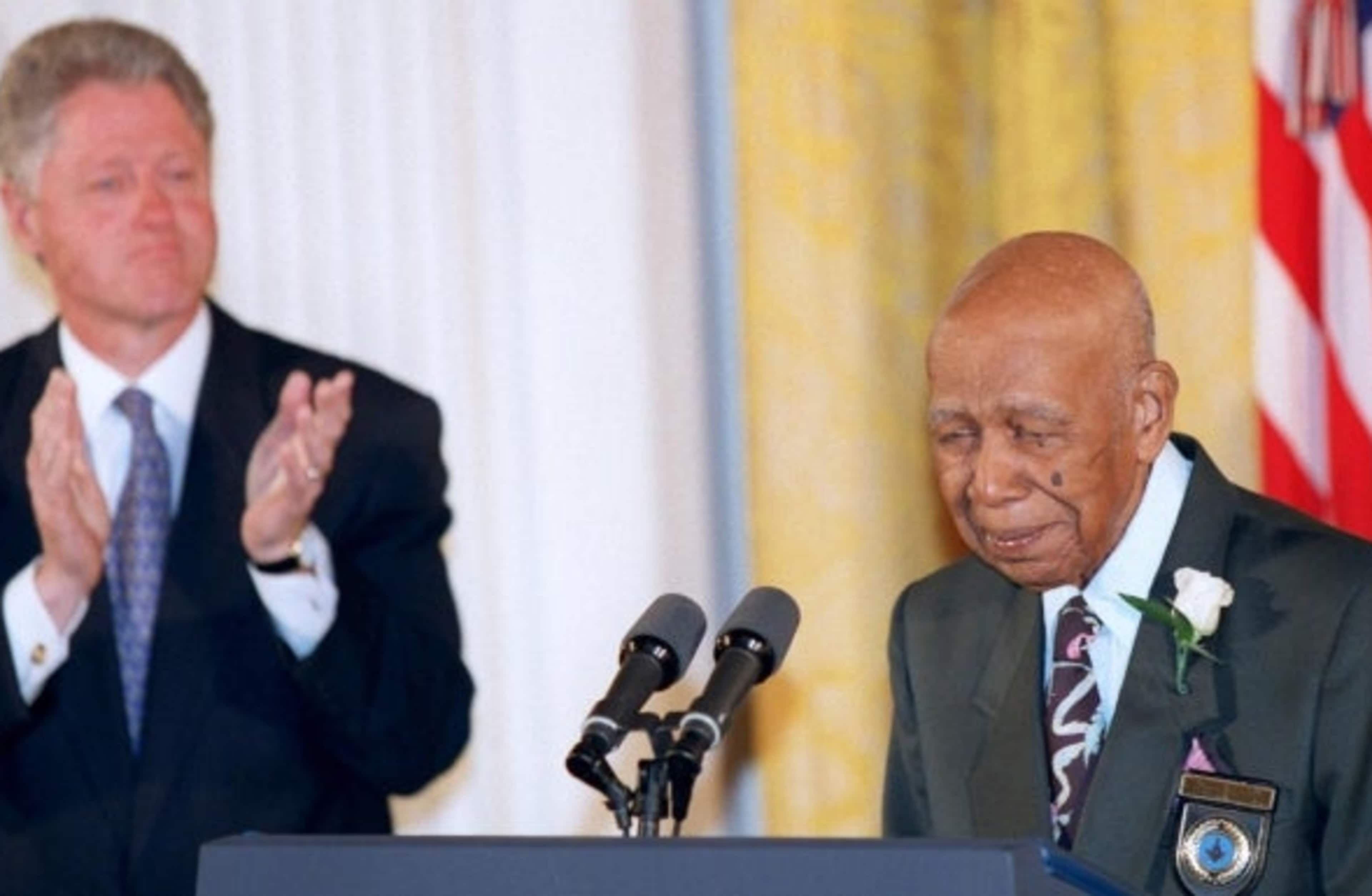
Analyze the composition of this photograph. The President, representing the continuity of the government that authorized the study, stands above Mr. Herman Shaw, one of the few surviving subjects. Mr. Shaw’s posture is one of profound dignity, yet he is seated, physically diminished by age and the long-term effects of the trauma. The President is clapping—a gesture of acclaim—but for whom? For the survivors’ endurance? Or for the government’s benevolence in finally admitting the truth? The apology validates the suffering, but it also sanitizes the crime, relegating it to the past tense.
THE STATE APOLOGIZES ONLY WHEN THE SILENCE BECOMES MORE EXPENSIVE THAN THE TRUTH. THIS IS NOT CLOSURE; IT IS DAMAGE CONTROL.
Who is not visible in this image? The hundreds of men who died before 1997. The wives who contracted syphilis. The children born with congenital defects. The apology acts as a ‘modern primary source,’ freezing the narrative in a moment of reconciliation that masks the decades of active deception. While essential for the record, this image captures the asymmetry of power that defined the entire study: the State stands, the Subject sits. The State speaks, the Subject listens. Even in apology, the hierarchy remains intact.