


In 1953, a storm surge slammed into the Netherlands’ southwestern coast. The North Sea rose like a fist, breaching dikes in 67 places. Over 1,800 people drowned. 100,000 were evacuated. 200,000 hectares of farmland turned to salt. The Dutch had fought water for centuries—but this was a knockout.
For the Dutch, water was never an abstract threat. It was a daily negotiation. By the 13th century, they had already invented the polder: land reclaimed from lakes and marshes, ringed by dikes, drained by windmills. Every generation added another layer. The Zuiderzee Works (1918–1932) turned a shallow inland sea into a freshwater lake, creating 165,000 hectares of new land. The Delta Works (1958–1997) sealed off entire estuaries with movable storm surge barriers, gates that rise only when the water demands.
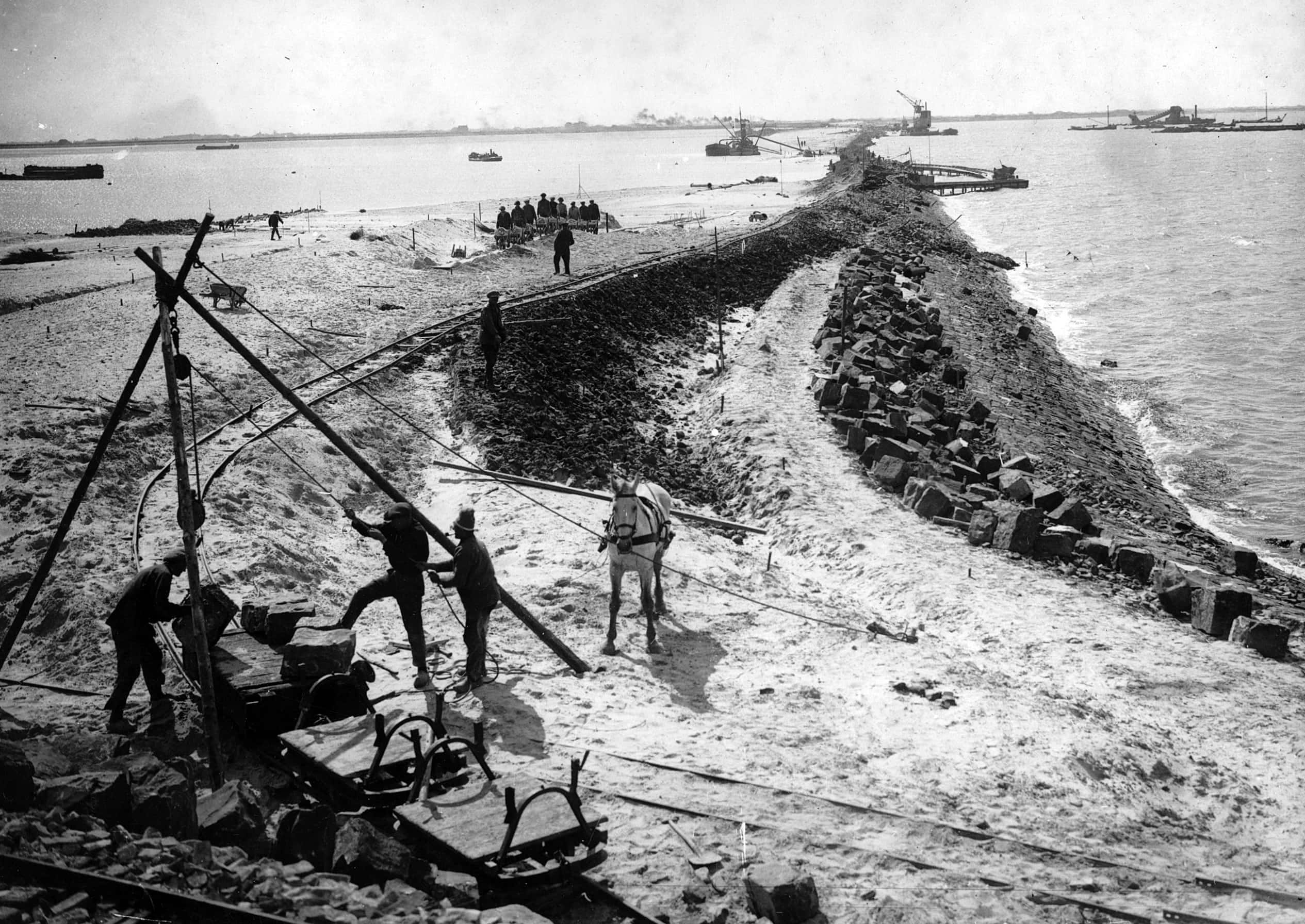
These were not heroic, one-off feats. They were systematic, iterative, and brutally pragmatic. The Dutch understood that the sea does not negotiate. So they built with the water, not against it. They accepted that flooding is inevitable—and designed for recovery, not just prevention.
Why They’re Your Teachers
You are living through a slow-motion flood: climate disruption. Heat waves, wildfires, supply chain fractures, biodiversity collapse, sea-level rise. The old approach—build higher walls, wait for disaster, then react—is failing. The Dutch offer a different manual: design for the inevitable, not the ideal. Their principles are not about stopping the water. They are about living with it, bending it, and thriving in the face of it.
The Principles
1. Accept the flood, then design for it. The Dutch don’t ask, “How do we keep water out?” They ask, “Where will it go, and how do we let it in safely?” The Room for the River program (2006–2018) lowered floodplains, widened channels, and created overflow basins. When the Rhine floods now, the water spreads across designated fields, not cities. Translation: Stop trying to prevent every climate disruption. Instead, identify where the disruption will do the least harm—and build capacity there. Create “safe” failures: backup systems, redundant routes, buffer zones. The goal is not invulnerability; it is graceful damage.
2. Build modular, not monumental. The Delta Works are not one wall. They are a network of barriers, sluices, gates, and dunes. The Maeslantkering storm surge barrier has two massive arms that swing shut like a door—but they are designed to fail open if a ship gets stuck. Translation: Your climate adaptation should be a system, not a single solution. Diversify energy sources. Decentralize food production. Create modular housing that can be moved or elevated. When one part breaks, the rest keeps working. Monuments are brittle; networks are resilient.
3. Pay for water management like a mortgage, not a charity. The Dutch Water Authorities are ancient—some date to the 13th century. They levy taxes on every landowner based on the value of their property and the flood risk. Everyone pays, every year. No disaster-fundraising drives. Translation: Climate adaptation requires consistent, predictable funding—not emergency budgets. Treat it like insurance or infrastructure: a fixed cost of existence. Budget for it annually. Tie it to property values or carbon footprints. The question is not “Can we afford it?” but “What is the cost of not doing it?”
4. Make the infrastructure visible and public. In the Netherlands, dikes are not hidden. They are parks, bike paths, sheep pastures. The Afsluitdijk is a 32-kilometer highway with a bike lane. The Oosterscheldekering barrier has a viewing platform. Translation: Don’t hide your climate adaptations in technical reports. Put them where people can see them. Create green roofs, rain gardens, elevated parks, floodable plazas. Make resilience a feature, not a secret. When the public sees the infrastructure, they understand the risk—and they support the investment.
5. Let nature do the heavy lifting. The Dutch learned that sand dunes are better than concrete walls—they shift, absorb, and recover. The Sand Engine (2011) dumped 21 million cubic meters of sand off the coast; wind and waves spread it naturally along the shoreline, rebuilding dunes without constant human intervention. Translation: Use natural systems as your first line of defense. Restore wetlands for storm surge absorption. Plant trees for heat mitigation. Use soil microbes for carbon sequestration. Work with ecological processes, not against them. It is cheaper, more durable, and often more effective.
6. Plan for the worst, then add a margin. The Dutch design dikes for a 1-in-10,000-year storm—far beyond any historical precedent. For the Delta Works, they assumed sea-level rise of 1 meter by 2100, then added another meter of safety factor. Translation: When you plan for climate adaptation, do not use the average. Use the worst-case scenario you can imagine, then add 50%. The cost of overbuilding is small compared to the cost of failure. Underestimating is the most expensive mistake.
7. Build a culture of memory and maintenance. Every Dutch child learns the story of the 1953 flood. Every year, the country exercises disaster response. Dikes are inspected weekly. Translation: Climate adaptation is not a one-time project. It is a permanent practice. Create rituals: annual risk reviews, community drills, transparent reporting. Keep the memory of past failures alive—not to scare people, but to remind them why the maintenance matters. Complacency is the real floodgate.

The Limit
The Dutch had a unique advantage: a small, wealthy, homogeneous population with a centuries-old culture of water management. They could levy taxes, enforce land-use laws, and build massive public works without significant political opposition. Your context is different. You may face climate denial, regulatory fragmentation, or budget constraints. You cannot simply copy the Dutch model. But you can adopt their logic: accept the problem, design for the inevitable, invest consistently, and make resilience visible. The water is coming. The only question is whether you will build the dike—or just watch it rise.